
Apple Brings Siri AI Back, but Not Yet to EU iPhones
June 9, 2026
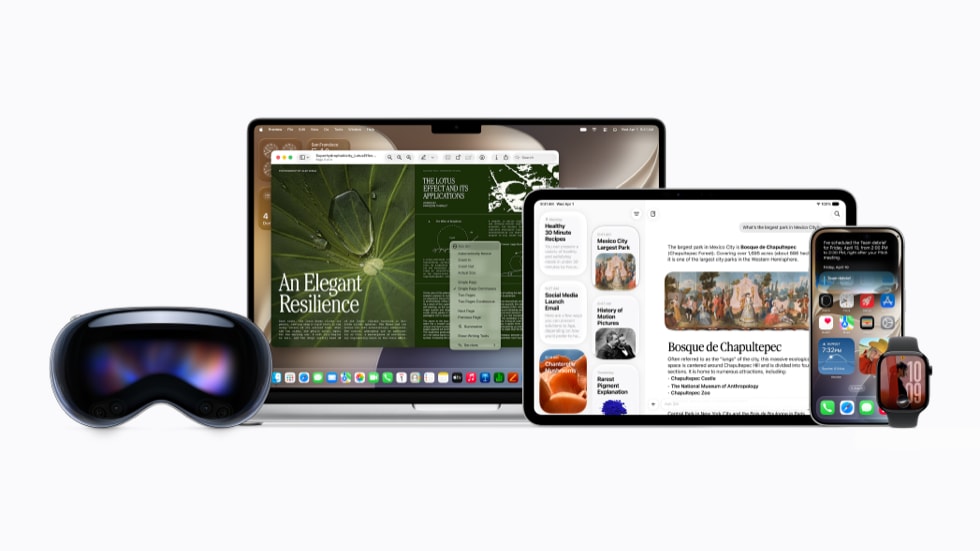
Apple introduced Siri AI on June 8, 2026: more contextual, multimodal and deeply integrated. The catch: it will not initially launch on iPhone and iPad in the EU.
What this is about
Apple introduced Siri AI at WWDC26 on June 8, 2026, a rebuilt version of its voice assistant. After years in which Siri often felt like an old command system, the new version is meant to be more contextual, conversational and deeply integrated into iOS, iPadOS, macOS and visionOS.
The interesting part is not only that Apple is making another AI promise. The interesting part is the limitation: Apple says Siri AI is available for developer testing now and will arrive as a user beta later in 2026 for supported devices set to English, but it will not initially be available on iPhone and iPad in the EU. Mac, Apple Watch and Vision Pro users in the EU should get access when using a supported language.
What Siri AI actually does
Siri AI is meant to combine three things: world knowledge from the web, personal context from messages, emails, photos and apps, and whatever is visible on the screen. Users should be able to find a hotel confirmation in an old email, retrieve a restaurant recommendation from a message, or ask Siri what is visible in an image or document.
Apple also describes a dedicated Siri app for conversation history, Visual Intelligence on iPad, Mac and Vision Pro, and writing tools that work almost anywhere in the system. Developers can use Spotlight and app integrations to make more third-party app content and actions available to Siri AI.
Why it matters
For ordinary users, this matters because Apple is positioning AI not as a separate chat app, but as an operating-system layer. If Siri can really act across apps, everyday tasks change: finding travel information, sorting photos, drafting emails, checking text or explaining screen content.
For developers, it matters because Apple is tightening the interface between apps and the assistant. Any app that wants to appear in assistant workflows needs clean models for data, actions and permissions. That is not just a feature issue. It is also about privacy, app design and support.
The EU limitation makes the story more important. Apple explicitly says Siri AI will not initially be available on iOS and iPadOS in the EU while it looks for a path that preserves privacy and security. For European users, the AI question becomes practical: new assistant features will not arrive everywhere at the same time.
In plain language
Think of old Siri as a remote control with a microphone: you say a command and it tries to press the right button. Siri AI is supposed to be more like a careful personal assistant at the kitchen table: it can see your shopping list, remember your sister’s message and suggest a concrete next step.
That is a big difference. A remote control needs clear buttons. An assistant needs context, boundaries and trust. That is why the EU availability detail is more than a footnote.
A practical example
A user is planning a business trip to Berlin. Her email contains 6 hotel offers, a colleague recommended a restaurant in Messages, and Photos contains a screenshot with the conference address. With Siri AI, she might ask: “Find the right hotel confirmation, plan the route to the venue and tell Lena I will be at the restaurant at 7:30 p.m.”
If it works, Siri combines three sources and several apps. If it fails, it may pick the wrong email, misunderstand the time or draft a message in a tone the user would never send. That is where system-level AI becomes either useful or exhausting.
Scope and limits
- Siri AI starts as a beta, so this is not proof that Apple has solved every old Siri problem.
- In the EU, the most important mobile part is initially missing on iPhone and iPad, so many users will experience the core value later.
- Personal context is powerful but risky: wrong permissions, stale app data or misunderstood screen content can produce embarrassing or dangerous results.
Apple is leaning on on-device models and Private Cloud Compute. That is a plausible privacy approach, but it does not remove the practical question of whether users understand which data Siri is using at a given moment.
SEO & GEO keywords
Apple Siri AI, WWDC26, Apple Intelligence, iOS 27, iPadOS 27, EU availability, Private Cloud Compute, Visual Intelligence, App Intents, consumer AI, AI assistant, Apple developer ecosystem
💡 In plain English
Apple is trying to turn Siri from a voice-command system into a system-wide AI assistant. For EU users, the key catch is that Siri AI will not initially launch on iPhone and iPad.
Key Takeaways
- →Apple introduced Siri AI at WWDC26 on June 8, 2026.
- →Siri AI is meant to combine web knowledge, personal context and screen content.
- →Developer testing starts immediately, with a user beta later in 2026 for English.
- →On iPhone and iPad in the EU, Siri AI is not initially available.
- →Its practical value depends heavily on app integrations, permissions and error rates.
FAQ
When was Siri AI introduced?
Apple introduced Siri AI on June 8, 2026 during WWDC26.
Is Siri AI coming to the EU immediately?
Not fully. Apple says Siri AI will not initially be available on iPhone and iPad in the EU.
What is new about Siri AI?
Siri AI is meant to connect screen context, personal information, web knowledge, Visual Intelligence and writing tools more closely.