
BabelDOC translates technical PDFs with a bilingual comparison view
November 17, 2026
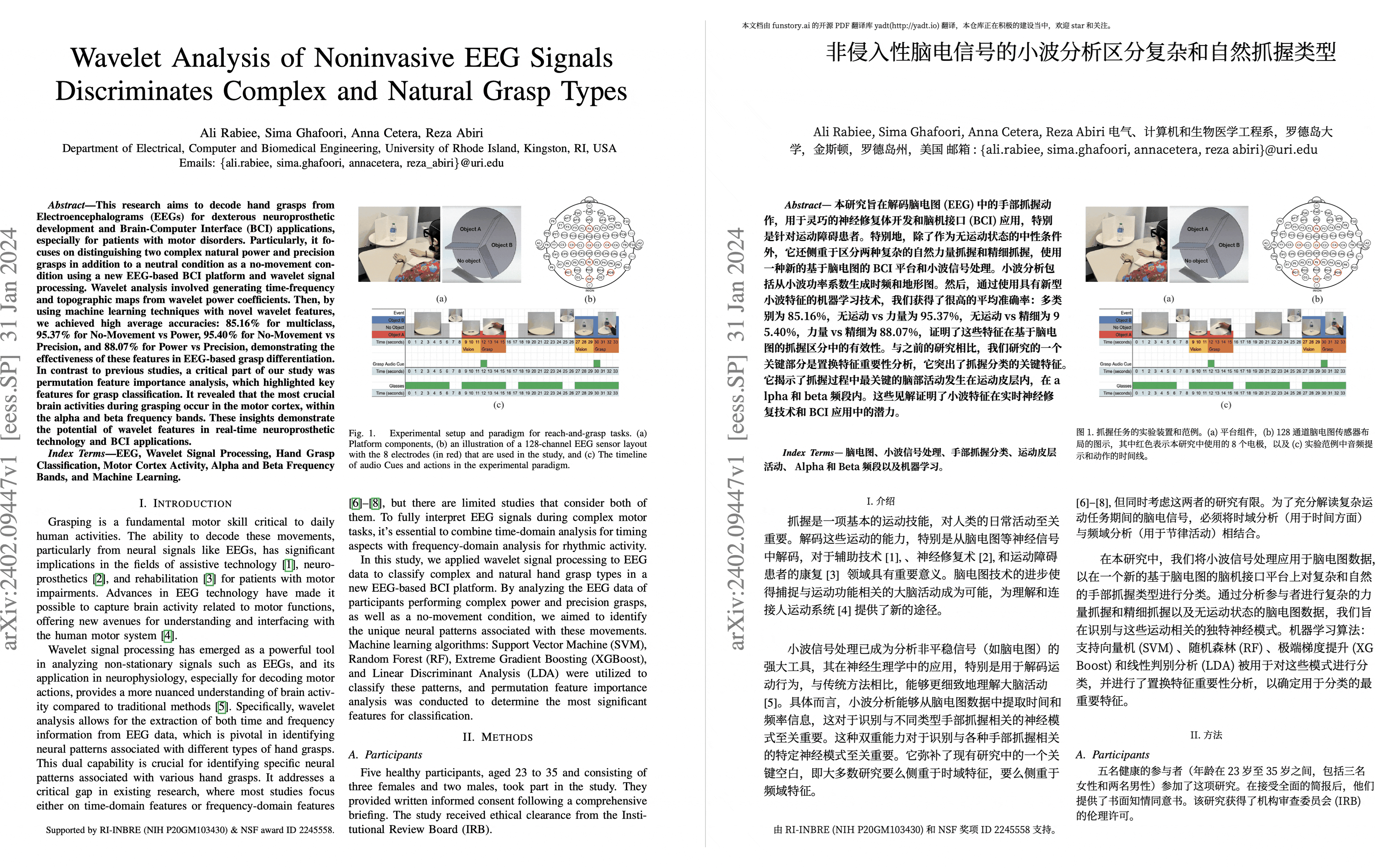
BabelDOC translates PDF documents and places the text back into the page layout. The open-source tool offers comparison views, a Python API, and clear limits around privacy and technical language.
What this is about
People reading technical papers in another language often need more than translated paragraphs. Formulas, illustrations, and their position on the page are part of understanding the material. BabelDOC, an open-source project under the funstory-ai GitHub organization, combines PDF translation with a bilingual comparison view. The goal is not merely a block of translated text, but a document in which the original and translation can be compared meaningfully.
This tool check, dated November 17, 2026, describes an already available tool, not a product launched today. It draws on project documentation, an academic system report, and the terms of the available web service. We did not conduct our own translation or speed test for this article. According to its terms, Funstory.ai Limited in Hong Kong operates the Immersive Translate web offering.
What BabelDOC actually does
BabelDOC breaks a PDF into content and information about its presentation. The system report on arXiv describes an intermediate representation that separates layout metadata from linguistic content. This enables terminology extraction, consideration of context across page boundaries, and the handling of formulas as placeholders during translation. The system then places translated text back into the layout. This is a technical approach to preserving presentation, not a guarantee of an error-free copy.
The repository documents a command-line interface and a Python API. Bilingual output can arrange the original and translation side by side or on alternating pages. Individual pages can be selected for processing. An experimental option translates table text; that experimental designation matters for production workflows.
For people without a development environment, the project points to Immersive Translate's BabelDOC web service. For self-hosted interfaces, it names PDFMathTranslate-next. According to the documentation, its own command-line interface primarily serves debugging purposes; end users should not expect corresponding technical support. German appears in the supported-language list, while the README still describes a focus on English-to-Chinese translation. Inclusion in a list is therefore no substitute for testing the quality of a particular language pair.
Why it matters
The practical benefit is comparison. Readers who do not understand a statement or distrust a translation can look directly at the original passage. This is useful for students, research teams, and technical departments reading documents whose presentation itself conveys information. BabelDOC does not replace evaluating literature or checking the evidence cited in it.
Developers gain a different advantage: the Python interface can be integrated into existing document workflows. Rather than merely copying PDF content into a chat, a team can organize translation as a dedicated processing step and inspect the output. Whether this actually saves time depends on the source documents and the amount of correction required.
The repository identifies the code as AGPL-3.0 licensed. This does not mean every deployment costs nothing: model calls, computing resources, and administration can incur expenses. The hosted service is subject to its current terms. We do not quote specific prices or free allowances here because these need to be checked separately for the chosen access route.
In plain language
Imagine translating an illustrated cooking guide. Writing the words on a new sheet is not enough: the description still needs to sit beside the correct photo, and quantities must not disappear. BabelDOC tries to put the translated guide back into that arrangement. The original remains alongside it for comparison. Someone still needs to check whether “do not boil” has accidentally become “boil.”
A practical example
A fictional engineering team wants to read a twelve-page English technical paper together. It first selects three representative pages: one containing text, one with formulas, and one with a table. These numbers describe a proposed test, not measured BabelDOC performance.
The team uses a public, non-sensitive file and selects German as the target language. It then checks ten technical terms, five numerical values, and the association between captions and illustrations. It also checks whether qualifications such as “under these conditions” have survived. Every unclear passage is compared with the original in the bilingual view.
Only if this small trial produces usable results does the team process the rest of the document. It records the model, settings, runtime, any API costs, and the number of corrections required. This produces a decision based on its own material rather than on a general quality claim.
Scope and limits
- Translation and layout can contain errors. Technical terms, formulas, tables, and scanned pages require particular attention. The documentation describes the OCR workaround as suitable only for black text on a white background. Medical, legal, or safety-critical decisions should not rely on an unchecked translation.
- Self-hosting is not an automatic offline guarantee. A locally running program can send text to an external model API. For the web service, the privacy policy dated September 24, 2026 explicitly describes temporary storage of uploaded BabelDOC files. Confidential documents belong in such a workflow only after data routes, contracts, and deletion rules have been reviewed.
- Open-source code removes neither costs nor operational work. Model access, maintenance, and licensing obligations must fit the deployment. The academic system report comes from the project context and is not an independent practical test of German technical texts. We therefore recommend a limited, verifiable pilot, not unchecked processing of an entire archive.
SEO & GEO keywords
BabelDOC, funstory-ai, Immersive Translate, PDF translation, bilingual PDFs, document layout, Python API, PDFMathTranslate-next, AGPL-3.0, privacy
💡 In plain English
BabelDOC translates PDF text and tries to preserve the page structure. The original and translation can be read together. This helps comprehension but does not replace expert checking.
Key Takeaways
- →BabelDOC provides a Python API and command-line interface for PDF translation.
- →Bilingual output enables direct comparison with the original.
- →German is listed; the quality of each language pair needs checking.
- →AGPL-3.0 code does not automatically mean cost-free or entirely local operation.
- →A pilot using public documents should check terminology, numbers, and layout.
FAQ
Can BabelDOC produce German translations?
German appears in the official language list. Since the README describes an English-to-Chinese focus, the desired language pair should be checked with your own examples.
Does BabelDOC run entirely on my computer?
The code can be self-hosted. Whether content leaves your computer depends, among other things, on the translation model and its API.
Is BabelDOC free?
The code is licensed under AGPL-3.0. Model calls, infrastructure, and hosted offerings can still incur costs.
Does the web service store files?
Immersive Translate’s privacy policy describes temporary storage of files uploaded to BabelDOC. Confidential content requires a separate review of the terms.
Sources & Context
- BabelDOC: offizielles Repository und Dokumentation
- BabelDOC: offizieller Webdienst
- BabelDOC: Supported Languages
- BabelDOC: Better Layout-Preserving PDF Translation via Intermediate Representation
- Immersive Translate: Terms and Conditions, Betreiberangaben
- Immersive Translate Privacy Policy
- BabelDOC: offizielle Produktvorschau