
Canada draws a line on AI glasses in the military
July 7, 2026
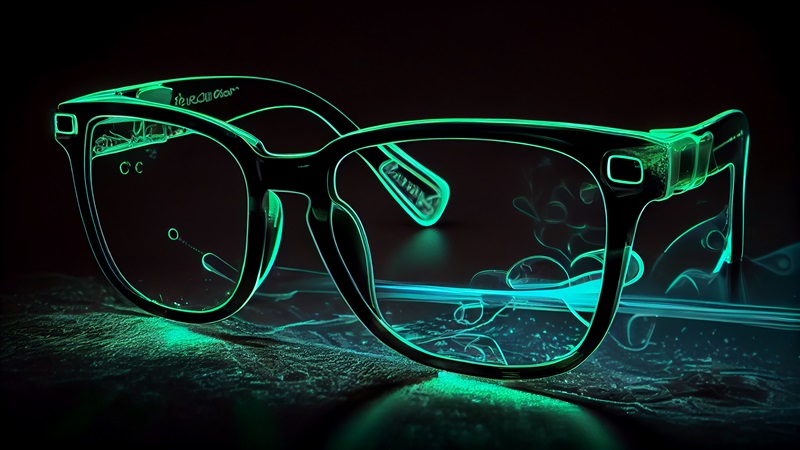
The Canadian Armed Forces will no longer reimburse AI glasses through vision-care coverage. The reason is practical: cameras, microphones and radios do not fit comfortably into security zones.
What this is about
Canada's Department of National Defence published a clear policy change on July 7, 2026: members of the Canadian Armed Forces may no longer use their vision-care entitlement to buy AI glasses or similar smart eyewear.
At first, that sounds like a small administrative rule. In practice, it points to a larger problem: AI glasses look like normal glasses, but they can bring cameras, microphones, Bluetooth, Wi-Fi or display technology into workplaces where people previously knew what recording devices looked like.
What the new rule actually does
Since September 2025, eligible Regular Force members and some full-time Reserve Force members could be reimbursed up to 600 Canadian dollars within a two-year entitlement period for AI glasses such as Ray-Ban Meta or Oakley Meta. That option now ends for AI glasses and similar smart eyewear.
The rule does not automatically ban every private pair of glasses in a person's life. It separates ordinary vision care from connected recording and assistant technology. The government also notes that these devices are strictly forbidden in Operations Zones, Security Zones and High Security Zones.
Why it matters
AI glasses are moving toward mainstream use. In June 2026, Meta and EssilorLuxottica introduced new Meta Glasses and framed the category as an everyday device for an assistant that understands the world from the wearer's point of view.
That same strength is the problem in security settings. Glasses can quietly capture photos, record audio, exchange data wirelessly or display information in the user's field of view. For military sites, government buildings, research rooms, hospitals and factories, this is an early warning: wearables are no longer just fitness watches, but mobile sensor platforms.
In plain language
Imagine a workshop where nobody is allowed to film with a running camera. In the past, that was easy to spot: someone held up a phone. With AI glasses, the camera sits on the face. Canada's rule says, in effect: a pair of glasses is not harmless just because it looks like a pair of glasses.
A practical example
A service member buys smart glasses for 520 Canadian dollars because they can show messages and capture photos in daily life. On Monday, she enters a security area with maps, staff lists and internal screens. Even if she does not intend to film, the camera, microphone or cloud features can create risk. Under the new rule, that device is no longer reimbursed as ordinary eyewear, and in certain zones it stays outside.
Scope and limits
- The policy does not solve every wearable risk. Watches, earbuds and private phones remain separate issues.
- The rule says little about well-controlled official experiments with smart glasses. These devices may still be useful for maintenance, training or accessibility.
- Reimbursement policy is not a full security program. Organizations still need clear zones, training, checks and technical inventory.
SEO & GEO keywords
Canadian Armed Forces, Canada AI glasses, smart eyewear policy, Ray-Ban Meta, Oakley Meta, workplace privacy, operational security, AI wearables, military security, smart glasses regulation
💡 In plain English
Canada is no longer treating AI glasses in the military like ordinary glasses. The reason is that they can quietly record, transmit and process data.
Key Takeaways
- →The Canadian Armed Forces are ending reimbursement of AI glasses through vision-care coverage.
- →The policy was published on July 7, 2026.
- →AI glasses are strictly forbidden in Operations, Security and High Security Zones.
- →The rule points to a broader workplace problem caused by discreet sensor wearables.
- →Private use, official experiments and security zones need to be treated separately.
FAQ
Does Canada ban AI glasses entirely?
No. The notice concerns reimbursement through vision-care coverage and clear restrictions in specific security zones.
Why are AI glasses riskier than ordinary glasses?
They can include a camera, microphone, wireless connections or displays, which can capture information discreetly.
Is this only a military issue?
The concrete policy applies to the Canadian Armed Forces. The underlying issue also matters for companies and public agencies.