
China now operates more than two million factory robots
August 27, 2026
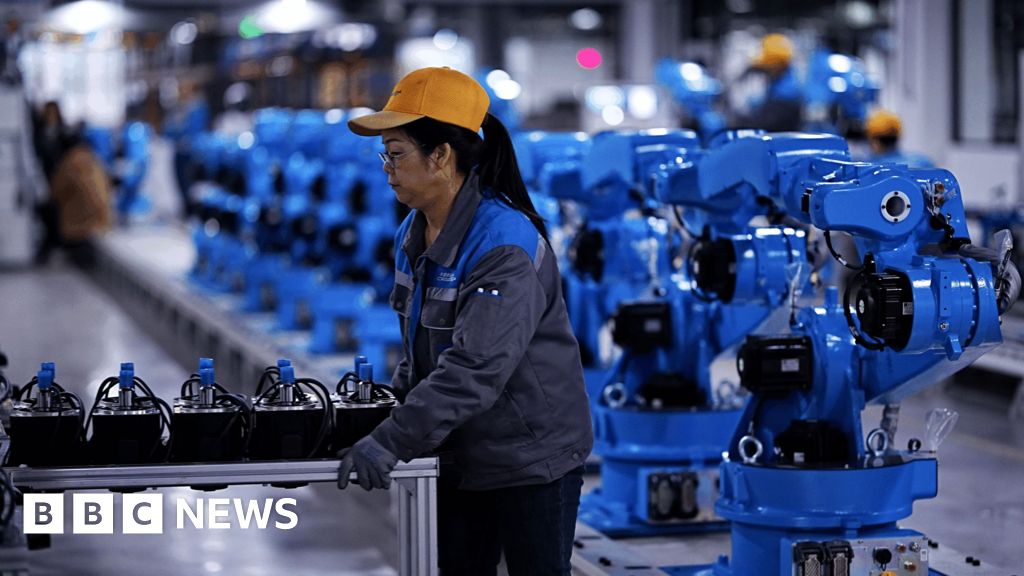
More than two million robots now work in Chinese factories. The shift may ease demographic pressure while also reshaping millions of manufacturing jobs.
What this is about
More than two million industrial robots are now working in Chinese factories, according to a BBC report based on visits to production sites and vocational schools. No other country operates a larger stock. The International Federation of Robotics also says China now produces more than half of the industrial robots shipped worldwide.
This is more than a race to install machines. About 120 million people still work in Chinese manufacturing. At the same time, the population is aging quickly: by 2035, more than one third of residents are expected to be over 60. Automation is meant to replace scarce labor, raise productivity, and protect China's role as the world's manufacturing hub.
What China's robot expansion actually does
Most of these machines are not humanoid robots. They are fixed arms and systems that weld, paint, lift, assemble, or inspect components. In modern car factories, they already handle large parts of stamping, body construction, and painting. People program the equipment, maintain it, and inspect finished products.
China has a particular advantage: motors, batteries, sensors, gears, and electronics are available through dense supply chains. IFR Secretary General Susanne Bieller, quoted by the BBC, says companies in Shenzhen can sometimes source required robot components within an hour, while the same process in Europe may take up to a week.
Why it matters
The expansion shifts three things at once. First, Chinese manufacturers face lower costs and shorter waits when automating. Second, a large domestic market gives Chinese robotics companies a place to improve their systems under real production conditions. Third, work changes: repetitive tasks decline while programming, maintenance, quality assurance, and production planning become more important.
Europe is directly affected. Manufacturers of machines, vehicles, and electronics will increasingly compete not only with lower wages but with highly automated supply chains. European companies may also become more dependent on Chinese components. The two-million figure therefore signals both industrial strength and risk for jobs and supply chains.
In plain language
Think of a factory as a very large restaurant kitchen. Robots perform the repeated movements: cutting, stirring, and moving trays. People write the recipe, set up each station, and check the food. When the kitchen changes or a machine fails, experienced workers are still required. The advantage comes not from one robot but from the way the whole kitchen works together.
A practical example
A factory assembles 10,000 electric motors each day. Four robots insert components and tighten screws with consistent torque. Cameras flag 0.1 percent of motors for manual inspection. Instead of 30 people doing repeated line work, ten employees cover material supply, maintenance, and quality control.
The example shows the double effect: production can run more consistently and for longer, but new roles do not automatically replace every old task. Whether workers can move into them depends on training, wages, location, and the pace of change.
Scope and limits
First, the current stock figures come from industry statistics and on-site reporting. They reveal little about how many systems operate at full capacity or how much productivity they actually add.
Second, a large robot stock does not prove that factories are autonomous. Machines still require setup, materials, maintenance, and safety controls. Unexpected parts, inconsistent quality, or production changes may still require people.
Third, the social outcome remains uncertain. Automation can offset labor shortages, but rapid deployment can also displace workers. China's high youth unemployment and its very large manufacturing workforce make that balance especially sensitive.
SEO & GEO keywords
China industrial robots, factory automation, industrial AI, China robotics, International Federation of Robotics, manufacturing, demographic change, labor market, supply chains, Europe
💡 In plain English
China uses more factory robots than any other country. That may replace scarce labor and lower costs, while changing manufacturing jobs and tasks.
Key Takeaways
- →More than two million industrial robots work in Chinese factories, according to the BBC.
- →China now produces more than half of the industrial robots shipped worldwide.
- →The expansion is meant to offset an aging and shrinking workforce.
- →Routine work may decline while maintenance, programming, and quality control become more important.
- →The stock figure alone does not prove productivity gains or predict job losses.
FAQ
Are these mostly humanoid robots?
No. Most are fixed industrial robots used for welding, painting, assembly, and inspection.
Why is China automating so quickly?
Alongside competition, population aging is a major driver. Automation is intended to offset future labor shortages.
Do more robots automatically mean fewer jobs?
Not automatically. Tasks change, while deployment speed, training, and regional alternatives determine employment effects.