
CMR-CLIP reads cardiac MRIs without manual training labels
May 21, 2026
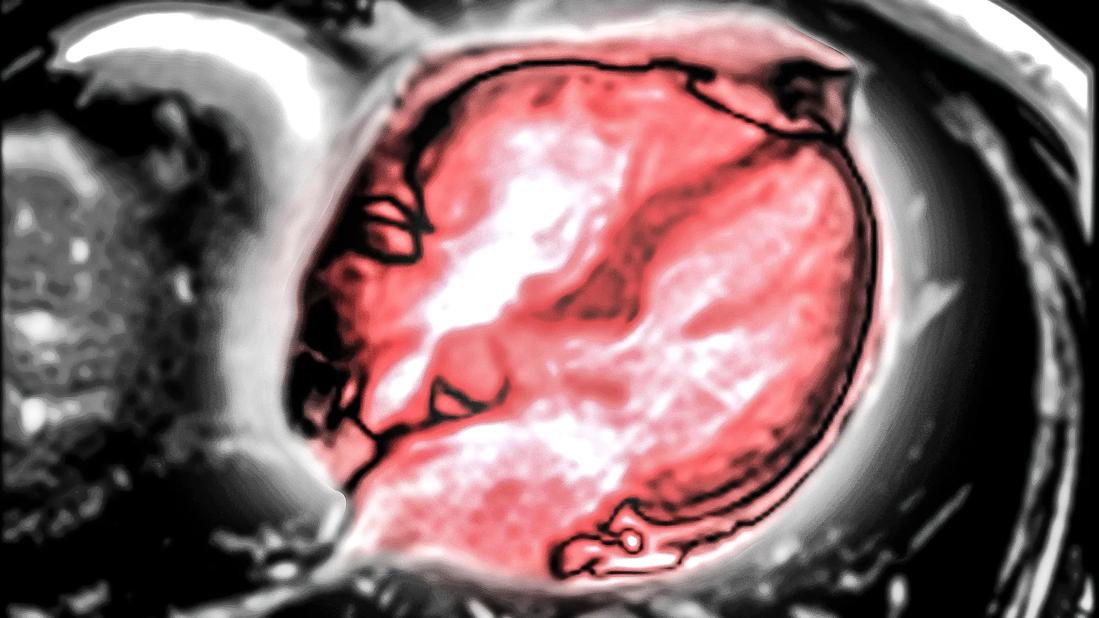
Carnegie Mellon and Cleveland Clinic show a specialist model for cardiac MRI that learns from scans and radiology reports. The upside is real, but clinical validation remains mandatory.
What this is about
Carnegie Mellon University and Cleveland Clinic introduced CMR-CLIP on May 21, 2026, an AI system for cardiac MRI interpretation. The key point: the model does not need manually labeled expert training data. It learns from real cardiac MRI sequences and the radiology reports attached to them.
That matters because cardiac MRI is one of the most demanding imaging workflows. A single case can contain hundreds or thousands of images and, according to Cleveland Clinic, may take 40 minutes or more to interpret.
What CMR-CLIP actually does
CMR-CLIP does not treat a cardiac MRI as a loose pile of still images. It processes sequences of the beating heart and links them to the language clinicians use in report impressions. According to the researchers, it was trained on more than 13,000 de-identified patient studies, over one million images and hundreds of thousands of motion sequences.
That lets the model connect visual patterns with descriptions such as enlarged left ventricle without being classically trained on that exact label. In tests, it outperformed general-purpose AI models by more than 35% in some cases; for selected specialist tasks, the release cites accuracy as high as 99%.
Why it matters
Cardiac MRI is considered a gold standard, but it is expensive, complex and dependent on scarce specialist expertise. If an assistant system can pre-sort cases, retrieve similar exams or make rare patterns easier to see, it could reduce delays and uneven quality.
The distinction is important: this is not an autonomous doctor. CMR-CLIP is most interesting as a tool for radiology teams that already write and check real reports. The code is public, and the research appeared in Nature Communications.
In plain language
Imagine an experienced baker who does not only read recipes, but watches every dough being kneaded and then compares the notes from other bakers. After many real baking sessions, she learns which movement in the dough points to which outcome. CMR-CLIP does something similar with beating hearts and report text.
A practical example
A hospital reviews 120 cardiac MRIs per week. Fifteen show rare motion patterns that only a few specialists can confidently classify. A CMR-CLIP-like system could flag those 15 cases, retrieve similar historical scans and show the radiologist the relevant sequences first. The human still decides, but the path shifts from 40 minutes of broad review to a much more focused check.
Scope and limits
- The published figures come from research testing, not from broad clinical approval for routine decisions.
- Medical data varies by hospital, scanner and patient population; external validation remains essential.
- A model trained from report text can also inherit human documentation patterns and errors.
SEO & GEO keywords
CMR-CLIP, Cleveland Clinic, Carnegie Mellon University, cardiac MRI AI, cardiac MRI, Nature Communications, medical AI, radiology foundation model, clinical decision support, AI in healthcare
💡 In plain English
CMR-CLIP is a research model that links cardiac MRI scans with radiology reports. It could help radiologists review complex cases faster, but it does not replace clinical judgment.
Key Takeaways
- →CMR-CLIP was introduced on May 21, 2026 by Carnegie Mellon and Cleveland Clinic.
- →The model learns from MRI sequences and report text instead of manual labels.
- →The researchers cite more than 13,000 studies and over one million images as training data.
- →Selected tests showed clear gains over general-purpose AI models.
- →Clinical validation and human oversight remain necessary.
FAQ
Is CMR-CLIP already a clinical product?
The sources describe a research paper and a public codebase. Routine use would require additional approval, validation and local review.
What is the main advantage?
It uses existing report text and does not need expensive manual labels for every condition.
Can it replace radiologists?
No. Its realistic role is assistance for retrieval, triage and decision preparation.