
G2 data shows who really uses AI image generators
August 1, 2026
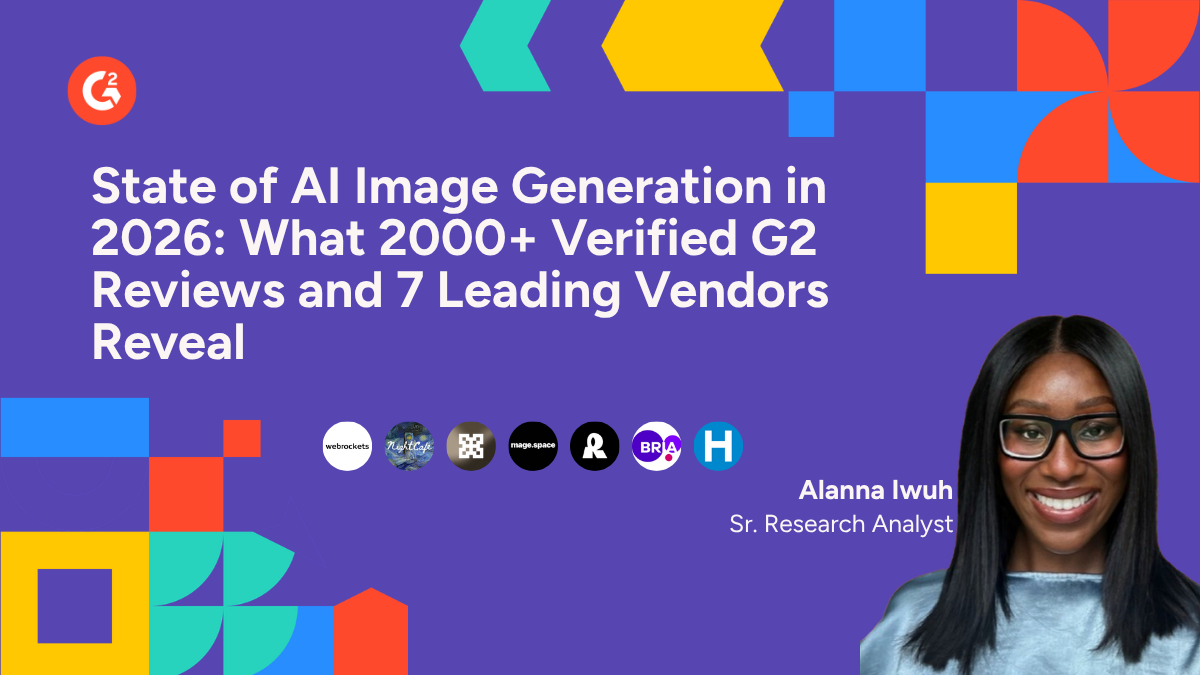
G2 analyzed 2,111 verified reviews. The notable finding: in 2026, AI image generators are driven heavily by individuals and small businesses.
What this is about
G2 published an analysis of the AI image generator market on August 1, 2026. The report is based on 2,111 verified software reviews from August 28, 2025 to July 25, 2026, plus a survey of seven vendors.
The interesting point is not that image generators are growing. That would be too broad. The interesting point is who is visibly using them: according to G2, 70 percent of identified reviewers come from individual-user or small-business contexts. Enterprise reviewers account for only 14 percent.
What the G2 analysis actually does
The analysis looks at reviews in the AI Image Generation Software category. G2 separates review data from vendor research. The review data shows who is rating products, which problems appear, and where practical value becomes visible.
The vendor survey adds the supplier side. G2 names getimg.ai, NightCafe, Lapis, Recraft, Bria AI, Mage, and 1minAI as surveyed vendors. The survey period ran from April 30 to May 12, 2026. That makes the report a market snapshot from real software usage, not a lab benchmark for image quality.
Why it matters
Many AI debates sound as if everything revolves around frontier labs, data centers, and large enterprises. For image generators, G2’s usage picture looks different. The tool often sits where design budgets are tight: with founders, solo operators, marketing teams, online shops, and small agencies.
That has consequences. If small teams can create product images, ad variants, social media visuals, or presentation graphics faster, the daily rhythm of creative work changes. It does not automatically replace professional design. But it lowers the threshold for visual experimentation.
At the same time, the report lands in a new regulatory setting. From August 2026, transparency and labeling duties in Europe become more visible. Anyone using AI images therefore needs not only a good visual, but also clear processes for rights, origin, labeling, and approval.
In plain language
Imagine a small bakery that used to call an agency for every poster. Now there is a fast photo table in the back room. The bakery can try ten visuals before professionally finishing one. That does not turn it into a design agency, but it changes the speed and cost of trying ideas.
A practical example
A small online shop sells 300 products and tests 20 new ad visuals per week. Previously, maybe two variants were designed because every visual cost time and money. With an image generator, the team creates 20 rough variants, rejects 15, and sends five to a designer for review.
The value is not that every image is perfect. The value lies in the draft stage: more ideas, faster selection, fewer empty campaign starts. If labeling, brand style, and rights checks are missing, the same process can also create chaos.
Scope and limits
- G2 reviews show usage signals, but not the entire market. People who do not write reviews are missing from this view.
- The 70 percent figure refers to reviewers with identified company size, not necessarily all users worldwide.
- Image generators do not automatically solve copyright, brand-style, photorealism, stereotype, or EU labeling questions. Small teams in particular need simple rules for that.
SEO & GEO keywords
G2 State of AI Image Generation 2026, AI Image Generation Software, AI image generators, Small Business AI, generative images, Creator Tools, Recraft, Bria AI, NightCafe, EU AI Act transparency, Marketing Automation
💡 In plain English
AI image generators in 2026 are not only an enterprise tool. G2’s review data suggests that individuals and small businesses are especially visible users. That turns image AI into an everyday tool for marketing, shops, and creators.
Key Takeaways
- →G2 analyzed 2,111 verified reviews of AI image generators.
- →According to G2, 70 percent of identified reviewers come from individual-user or small-business contexts.
- →Enterprise reviewers account for only 14 percent in the analysis.
- →The report is a usage and market snapshot, not a neutral image-quality benchmark.
- →For small teams, rights, style control, and labeling become more important.
FAQ
What is the key number in the G2 report?
G2 cites 2,111 verified reviews and says 70 percent of identified reviewers belong to individual-user or small-business contexts.
Does this prove enterprises do not use image AI?
No. It only shows who is especially visible in G2’s review data. Enterprise usage may appear elsewhere.
Why does this matter for small firms?
Because visuals, ad concepts, and product graphics can be tested faster before a team spends money on final design.
Which risks remain?
Rights, labeling, brand style, unrealistic images, and stereotyped depictions still need review.