
GPT4All searches your documents with AI running on your computer
November 8, 2026
GPT4All combines local language models with document search. That is useful for private knowledge collections, provided model choice, source checks and cloud settings are handled carefully.
What this is about
GPT4All from Nomic is a desktop application for people who want to work with language models without sending every question to a cloud chat service. Its interface combines model downloads, conversations and search across personal files. That makes it relevant to personal knowledge collections, project documents and initial experiments with local AI.
This tool check draws on the product pages, documentation and public source code accessible on November 8, 2026. It describes an existing tool, not a new major release. No hands-on performance test was conducted. The important point is its documented workflow: users can download a model and use their documents locally as context.
What GPT4All actually does
According to the quickstart, installation packages are available for Windows, macOS and Linux. After installation, users select a model, download it and open a chat. The project description says a dedicated graphics card is not required, although responsiveness depends on the model and the computer.
LocalDocs adds personal files to this chat. Users create a named collection and connect it to a folder. The application then turns text snippets into numerical search representations called embeddings. When a question arrives, it retrieves semantically related snippets and includes them in the language model's prompt. This is search followed by answer generation, rather than retraining the model.
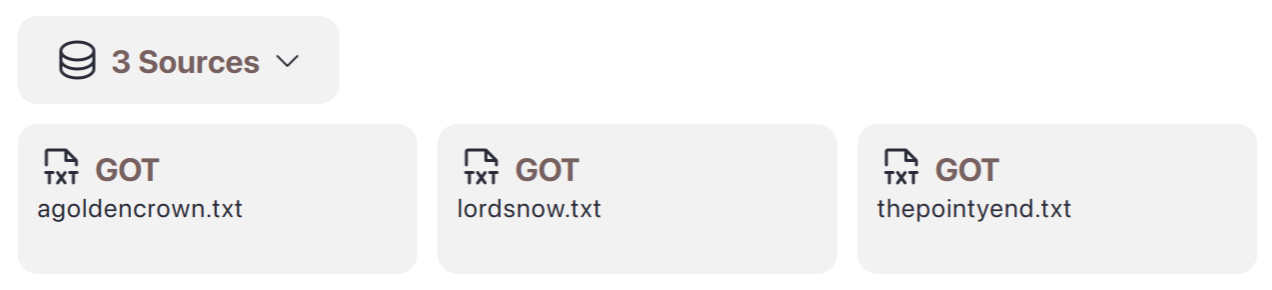
The LocalDocs documentation also shows a source view beneath responses. This lets users check which files were consulted. The settings documentation lists TXT, PDF, Markdown and RST as the file extensions allowed by default. That does not mean every scanned PDF or complicated table will be understood reliably.
Why it matters
People who repeatedly search the same project documents often need manageable access to their own information, rather than another general-purpose chat website. GPT4All brings model management, chat and document collections together in one application. This can lower the entry barrier compared with assembling a local AI environment from separate components, without removing responsibility for the results.
The published license text places the software under the MIT license. Downloaded models have separate terms that should be checked, particularly before commercial use. Local computation does not inherently incur per-request model fees, but storage, electricity, hardware and setup remain real costs.
As an additional availability signal, Flathub lists a community-maintained Linux package. That listing is not an independent quality benchmark. Paid services elsewhere on Nomic's website should also not be confused with the terms of the local GPT4All application.
In plain language
LocalDocs resembles an assistant in a records room. Instead of reading every folder aloud for each question, the assistant finds a few relevant slips of paper and places them on a writer's desk. The writer turns those notes into an answer. If the wrong slips were selected or an essential page is missing, the answer can still sound convincing. The source view therefore provides a route back to the filing cabinet, but it does not replace looking at the original.
A practical example
A fictional association collects twelve approved meeting records and three project descriptions in a test folder. An employee installs GPT4All, downloads a model appropriate for the hardware and creates a LocalDocs collection. She waits for the ready indicator and enables the collection in her chat.
She then asks five questions whose answers she already knows, such as the agreed event location, a deadline and the person responsible. For each answer, she opens the listed sources and compares names, dates and qualifications against the original files. She also asks about a budget that is not documented anywhere. An invented amount would be a clear warning sign.
For this pilot, she records answer quality, waiting time and the effort needed to check responses. Only if the result helps in everyday work does she expand the folder. These numbers describe a proposed test, not measured product performance.
Scope and limits
- Privacy depends on settings. The documentation explicitly offers an optional Nomic Embed API that creates embeddings off-device. This option must remain disabled for the local test. Voluntary sharing of interactions through the Datalake option should also stay off; the documentation says it is disabled by default. Local files and chats still need protected user accounts and backups.
- Sources do not guarantee truth. Retrieval can miss important passages, and the model can misrepresent relationships. Original documents still need checking, particularly for numbers, conflicting versions and files that are difficult to extract text from. This workflow does not establish that an entire set of records has been reviewed.
- Hardware and models impose limits. Memory, model size and computing power determine usability. An open software license does not make every model unrestricted. Anyone expecting reliable answers immediately, without setup and oversight, should not treat this workflow as a ready-made substitute for professional judgment.
The sensible next step is therefore a small test using non-sensitive documents and questions with known answers. That reveals whether local processing and the unified interface justify the additional checking effort in a particular setting.
SEO & GEO keywords
GPT4All, Nomic, LocalDocs, local AI, document search, desktop assistant, embeddings, privacy, open source, local language models
💡 In plain English
GPT4All runs language models on your computer and can bring relevant passages from your files into answers. Cloud options must stay disabled for a local workflow. Important claims need checking against the original.
Key Takeaways
- →GPT4All combines model downloads, chats and LocalDocs in a desktop application.
- →LocalDocs retrieves relevant text snippets and displays the source files used.
- →The optional Nomic Embed API processes embeddings off-device.
- →MIT covers the software; model licenses need separate checks.
- →A small test with known answers reveals usefulness and errors in your own workflow.
FAQ
Is GPT4All automatically entirely local?
Local models and local embeddings enable a local workflow. The optional Nomic Embed API and voluntary data sharing must remain disabled for that workflow.
Do I need a dedicated graphics card?
The project description says it is not required. The selected model must still fit the available hardware and memory.
Does LocalDocs train a model on my files?
The documented feature retrieves relevant text snippets and adds them to the model prompt. That is not retraining the model.
Sources & Context
- Nomic: GPT4All – offizielle Produktseite
- GPT4All: Quickstart
- GPT4All: LocalDocs und Quellenansicht
- GPT4All: Einstellungen und optionale Cloud-Embeddings
- GPT4All: MIT-Lizenz
- Nomic: Anbieter und Unternehmensangaben
- Flathub: unabhängig betriebener Katalog, Community-Paket GPT4ALL
- Flathub: Paketmetadaten
- GPT4All: offizieller Quellcode und Systemhinweise