
Intel puts 5 billion euros behind Ireland’s AI-chip role
July 14, 2026
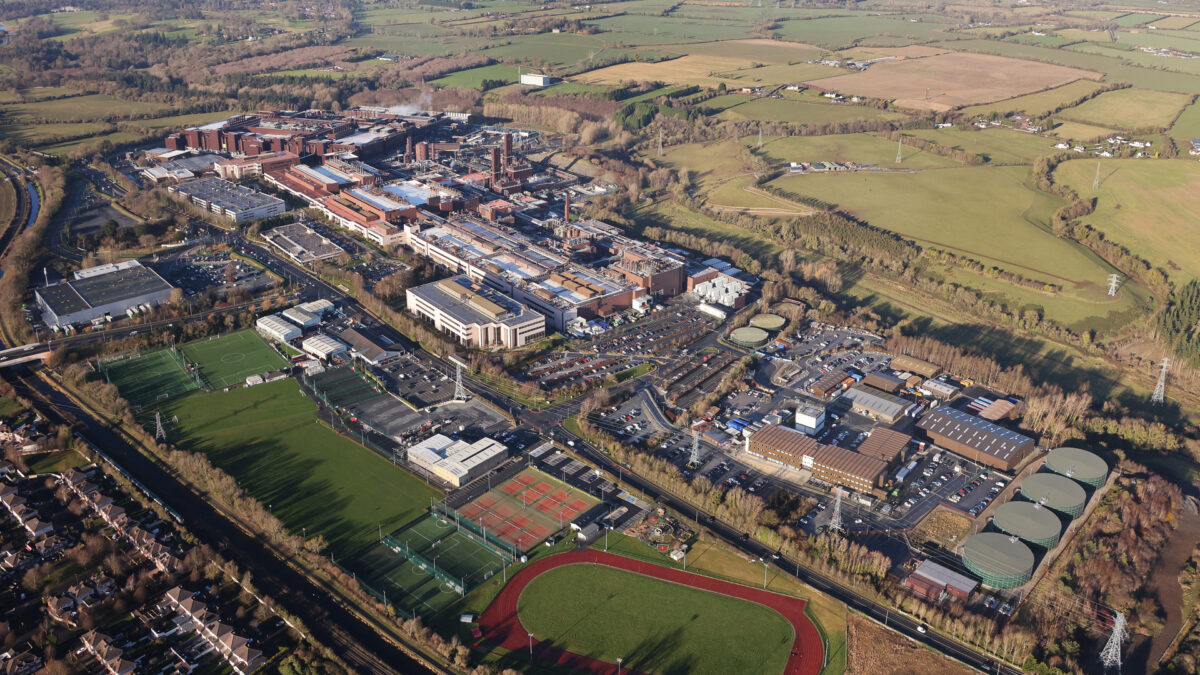
Intel is investing 5 billion euros in Leixlip. The story is less GPU hype than Europe’s attempt to pull critical AI server chips closer to its own supply chain.
What this is about
Intel announced a 5 billion euro investment in its Leixlip site in Ireland on July 13, 2026. On July 14, outlets including the Financial Times and Wall Street Journal picked up the story as an AI-chip and Europe supply-chain issue. That puts the primary source one day before the publishing run.
This is not a small factory refresh. Intel says it will make better use of existing manufacturing space, install new equipment, and increase output for Xeon 6 and next-generation Xeon processors on the Intel 3 node. For Europe, the important point is this: AI infrastructure does not depend only on GPUs. It also depends on server CPUs, packaging, supply chains, and sites that remain politically reliable.
What the investment actually does
Intel says the money will upgrade existing fabs, install leading-edge manufacturing equipment, and expand the automated track system across the campus. In other words, this is less about a symbolic new building and more about usable capacity inside an existing high-end facility.
The Leixlip site employs around 4,900 people, according to Intel. The new program is expected to involve specialized tradespeople for construction and equipment installation, while also creating permanent high-tech jobs. Intel also lists research and development as part of the expansion.
Why it matters
AI debates often focus on the most visible Nvidia chips or on new models. Real data centers are broader. GPUs need CPUs, memory, networking, power, cooling, and reliable procurement. If Europe depends fully on distant supply chains for every critical part, AI strategy becomes import strategy.
That is why the Leixlip expansion fits the wider logic of the EU Chips Act: more manufacturing capacity, less dependency, and more control over critical infrastructure. At the same time, Intel remains under pressure. It competes with TSMC, Samsung, and specialized AI-chip companies, and it still has to prove that announced capacity turns into competitive production.
In plain language
Think of an AI data center as a large kitchen. The GPU is the very fast cook at the stove. But without storage, kitchen management, power, water, and suppliers, no meal reaches the table.
Intel is not investing in the shiny plate at the end. It is investing in part of the kitchen that decides whether Europe has enough of its own capacity for many such kitchens.
A practical example
A European cloud provider plans a new AI offer for industrial customers in 2027. It needs 20,000 servers, many with accelerators, but every server also needs CPUs, motherboards, networking components, and reliable delivery windows.
If part of that processor production ramps in Ireland, procurement can become more resilient. Instead of waiting months for every component from Asia or the United States, the provider gets part of the critical server logic from an EU supply chain. That does not solve every bottleneck, but it reduces some geopolitical and logistics risk.
Scope and limits
- The investment does not create European GPU sovereignty. Xeon processors matter, but they are not the only bottleneck in modern AI data centers.
- Intel still has to execute technically and commercially. An announcement is not a production curve.
- More chip production does not automatically solve energy, water, and location conflicts around data centers.
SEO & GEO keywords
Intel, Leixlip, Ireland, AI chips, Xeon 6, Intel 3, EU Chips Act, semiconductor supply chain, AI infrastructure, Europe tech sovereignty
💡 In plain English
The investment does not make Europe chip-sovereign overnight. But it strengthens a real site meant to supply server processors for AI data centers. This is infrastructure policy, not only company news.
Key Takeaways
- →Intel announced the investment on July 13, 2026, one day before the UTC run date.
- →The money is meant to upgrade existing Leixlip fabs and increase capacity for Xeon 6 and next-generation Xeon processors.
- →For Europe, the story matters because of supply chains, AI infrastructure, and tech sovereignty.
- →The investment does not replace a European GPU strategy.
- →The real outcome depends on Intel execution, demand, and energy or location constraints.
FAQ
Why does Leixlip matter for AI?
The site makes advanced processors used in servers and data-center infrastructure.
Is this about GPUs?
No. Intel mainly names Xeon server processors on Intel 3. GPUs remain a separate bottleneck.
Does this mean EU chip sovereignty?
No. It is one building block for more regional capacity, not full independence.
Sources & Context
- Intel Newsroom: Intel Invests €5 Billion to Expand Manufacturing in Europe
- Financial Times: Intel to invest €5bn in Irish plant as AI chip demand surges
- Wall Street Journal: Intel to Invest €5 Billion for Expanded Manufacturing in Ireland
- European Commission: European Chips Act
- IDA Ireland: Intel in Ireland