
New York pauses generative AI through eighth grade for one year
September 10, 2026
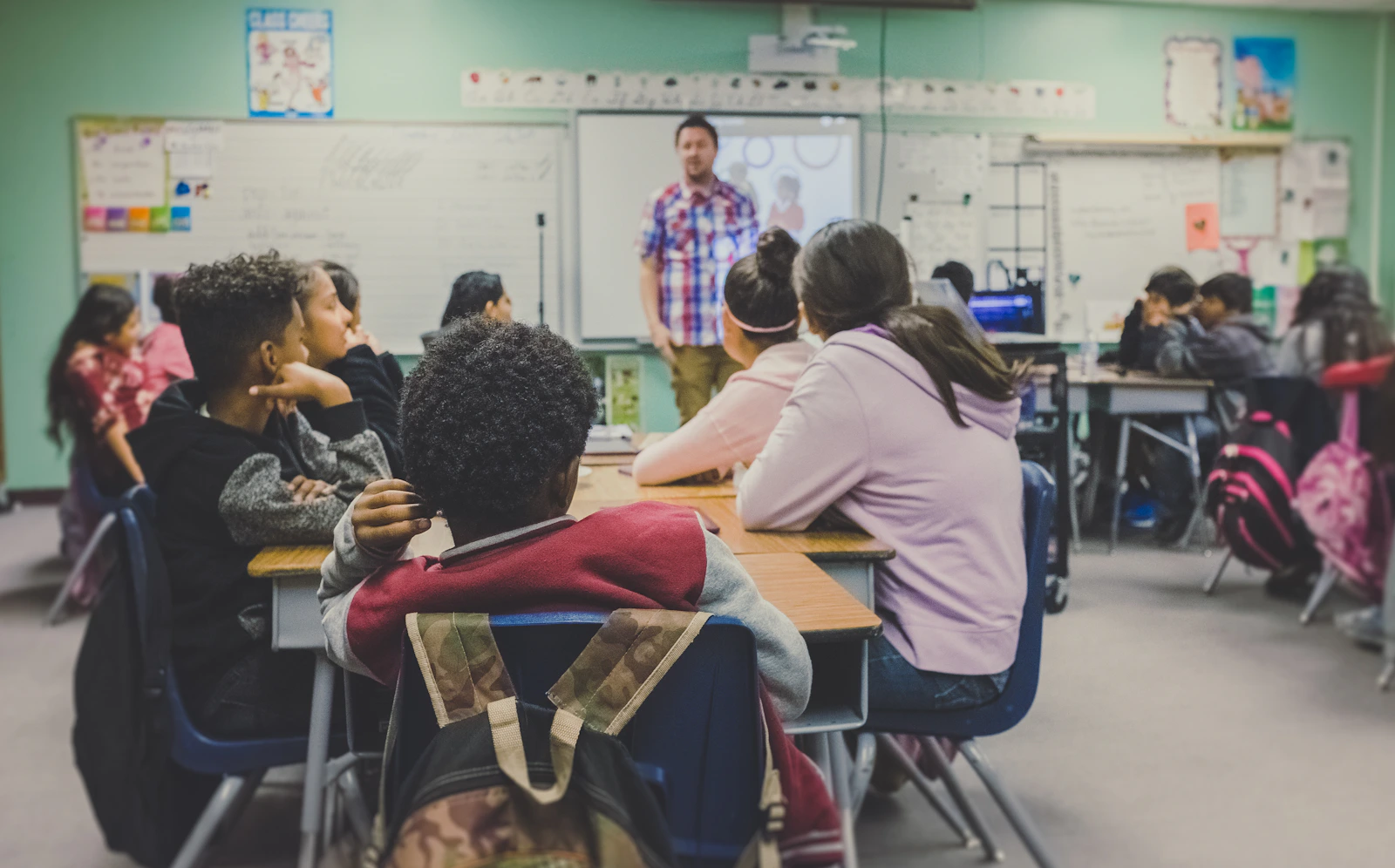
New York City is taking a tiered approach in 2026/27: an AI moratorium for younger students, limited high-school pilots and mandatory AI-literacy modules.
What this is about
New York City Public Schools will impose a one-year moratorium during the 2026/27 school year on student-facing generative AI from 2-K, the city's preschool program for two-year-olds, through eighth grade. Mayor Zohran Mamdani and Schools Chancellor Kamar H. Samuels announced the rule on September 2, 2026. The city says it covers nearly 600,000 students, or about two-thirds of the entire public-school system.
This is not a total ban on technology. The city combines the pause for younger children with limited high-school pilots, critical AI-literacy lessons, exceptions for assistive technology and new screen-time rules. The approach is therefore more revealing than a simple yes or no to AI: it separates age groups, purposes and levels of supervision.
What the moratorium actually does
Student-facing generative AI is excluded from 2-K through eighth grade for one year. Companion chatbots, which can simulate personal relationships, are prohibited across all grades. Teachers may continue using AI for lesson planning and operational work when tools meet New York City Public Schools safety requirements.
At high schools, five limited pilot types may reach no more than 50,000 teenagers, about five percent of the total student body. No more than five classes per high school can participate, always under the direct supervision of trained educators and with vetted tools. Every high-school student will also receive two 45-minute modules each year on what AI can and cannot do, bias and ethical risks, and effects on careers.
Why it matters
New York runs the largest public-school system in the United States. A rule affecting 600,000 children can therefore influence not only classrooms, but also procurement, product design and expectations in other districts. Politico, Chalkbeat and ABC7 independently reported on the moratorium and its tiered implementation.
The city is trying to avoid two risks at once: untested systems reaching younger children, and older students meeting AI in college and work without preparation. The announced pilots include Quill for text analysis, Edia for mathematics, Brisk Teaching for guided exercises, Playlab for assignment-specific applications and Intel AI-Ready Schools for longer projects. Their time limits range from a few minutes per week to one class period, and the tools are not meant to become the primary thinker.
In plain language
Think about swimming lessons. Young children are not simply dropped into the deep end because swimming will matter later. They first practice basic skills with people who can help directly. Older students may train in clearly marked lanes under supervision while learning to recognize currents and risks. New York is treating generative AI similarly: a pause at younger ages, limited trials later, and lessons about the tool itself.
A practical example
A seventh-grade student writes a book analysis in fall 2026. Her school laptop does not provide a generative chatbot. She works from the text, discusses evidence in class and receives feedback from her teacher. An exception could apply if vetted assistive technology is required because of a disability.
A tenth-grade student at the same school, however, joins an approved Quill pilot. For no more than 15 minutes per week, he answers questions about a passage and must mark supporting evidence. The teacher sees the activity, and the tool does not deliver a finished essay. He also attends two 45-minute AI-literacy modules. The rule thus distinguishes replacement of the learning process from tightly guided practice.
Scope and limits
First, the moratorium is not a controlled experiment. If performance rises or falls, the change cannot automatically be attributed to reduced AI use alone. The announced Technology in Schools Coalition therefore needs transparent criteria and data.
Second, school control ends at the edge of the school network. Children can use private devices and services outside class, while unequal access to help and technology remains.
Third, exceptions and vendor boundaries may be difficult to enforce consistently. Schools must define when software is genuinely generative, how data is protected and how accessibility is preserved. The one-year pause also does not yet answer what rules will apply in 2027/28. It creates time for evaluation, but it is not a long-term learning strategy by itself.
SEO & GEO keywords
New York City Public Schools, AI moratorium, generative AI, schools 2026, AI literacy, screen time, chatbots, education policy, Quill, Edia, Brisk Teaching, Playlab
💡 In plain English
New York City is pausing generative AI for students through eighth grade during 2026/27. Older students may test selected tools under close supervision and receive mandatory lessons on benefits and risks.
Key Takeaways
- →The one-year 2026/27 moratorium covers 2-K through eighth grade and nearly 600,000 children.
- →Companion chatbots are banned in every grade; teachers may use vetted AI for planning and operations.
- →Up to 50,000 high-school students may participate in five tightly limited pilot types.
- →Every high-school student receives two 45-minute AI-literacy modules each year.
- →Exceptions remain available for assistive technology, multilingual learners and career-readiness programs.
FAQ
Which grades does the AI moratorium cover?
It applies during the 2026/27 school year to student-facing generative AI from 2-K through eighth grade.
Is AI completely banned in New York City schools?
No. Teachers may use vetted tools, high schools will run limited pilots, and exceptions cover certain learning needs and programs.
How large are the high-school pilots?
No more than 50,000 teenagers, about five percent of the total student body, may participate. Each high school may include at most five classes.
What happens after the one-year pause?
A Technology in Schools Coalition is expected to evaluate the moratorium and pilots and publish recommendations for later school years.
Sources & Context
- NYC Mayor's Office: Generative AI moratorium in schools — September 2, 2026
- Politico: NYC school system unveils AI restrictions — September 2, 2026
- Chalkbeat: What to know about NYC's generative AI ban — September 2, 2026
- ABC7 New York: NYC schools ban AI through middle school — September 3, 2026
- New York City Public Schools — official site
- Unsplash classroom photography