
Nokia and Google bring AI agents into telecom networks
June 22, 2026
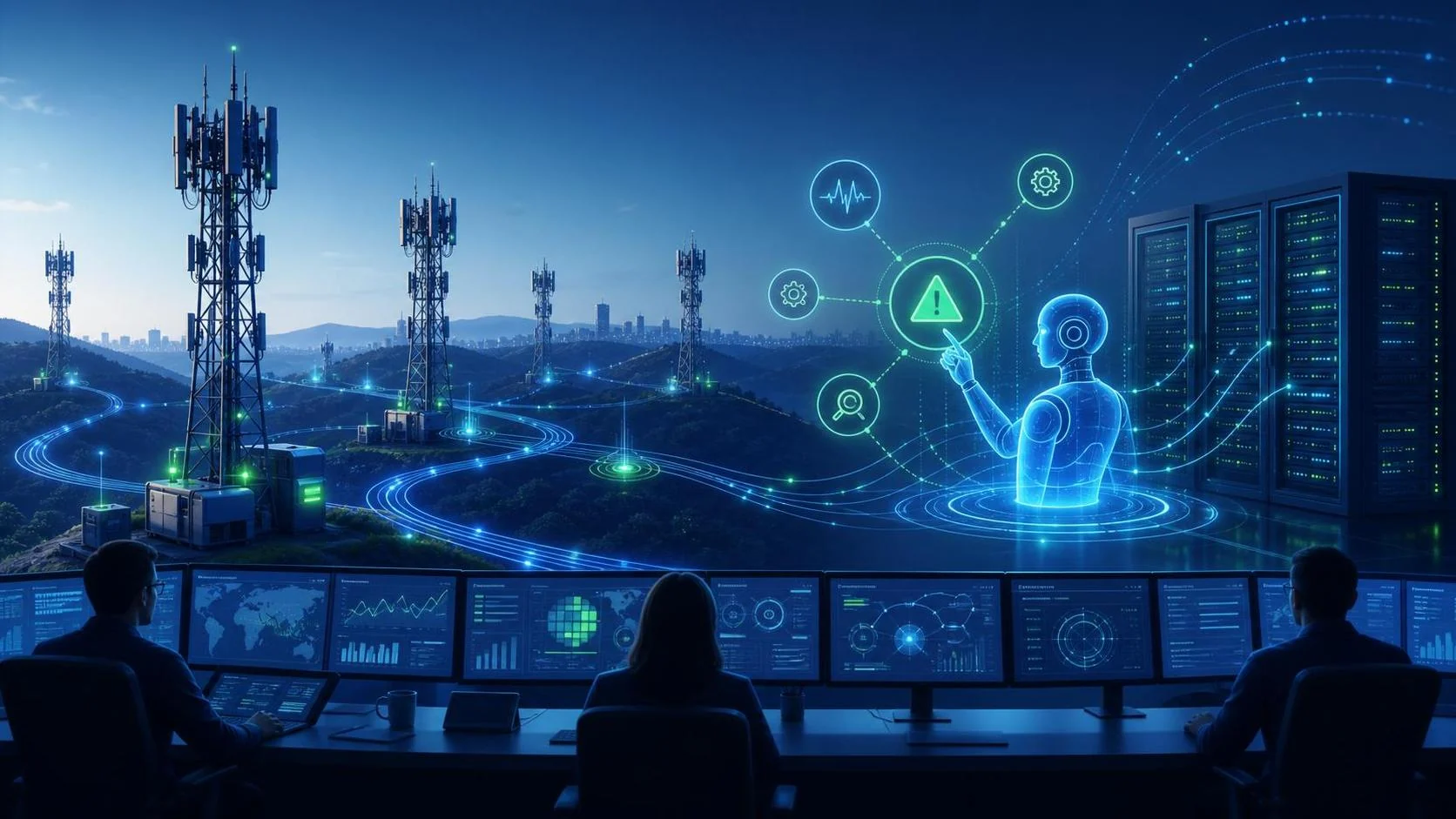
Nokia and Google Cloud want to put Gemini-based agents into network automation. The interesting question is not the launch language, but how much diagnosis a network should handle itself.
What this is about
Nokia and Google Cloud announced on June 22, 2026 that they will embed specialized AI agents into Nokia’s autonomous-network products. The agents are built with Google’s Gemini models and are expected to first help inside Nokia Assurance Center, where telecom operators detect, narrow down, and explain network incidents.
This sounds like enterprise software. It becomes interesting because mobile and fiber networks are not ordinary IT environments. When they fail, emergency services, hospitals, factories, rail passengers, and anyone who depends on mobile internet can feel it. AI agents in this layer are therefore not just a product update. They are a test case for automation in critical infrastructure.
What the telecom agents actually do
The announced agents are meant to read network signals, alarm data, telemetry, and historical patterns. Instead of a human clicking through many dashboards manually, an agent can summarize an incident: which region is affected, which network component looks unusual, which change happened shortly before, and which steps are likely to help.
Nokia frames this as part of a wider autonomous-network strategy. Google Cloud provides Gemini models and cloud tools; Nokia brings telecom domain knowledge, assurance products, and existing automation. According to today’s announcement, humans remain in the process. The agents are meant to prepare decisions and speed up workflows, not rebuild a network without control.
Why it matters
Telecom networks are becoming denser, more distributed, and harder to operate. 5G, edge sites, private campus networks, fiber, IoT, and future 6G components create more data points than traditional operations teams can comfortably review by hand. At the same time, customers expect video calls, payment terminals, emergency calls, and industrial systems to work.
The practical value is not a chatbot. It is shorter troubleshooting. If an agent can classify an outage in minutes instead of hours, providers can repair faster or at least communicate more clearly. The risk is just as clear: a bad recommendation in a network can do more than produce a wrong answer. It can disrupt real connections.
In plain language
Imagine a large hospital with thousands of cables, monitors, and alarms. In the past, a technician had to check each alarm one by one. The new assistant is like an experienced night shift saying: these five alarms belong together, the source is probably in equipment room B, and a new device was activated there 20 minutes ago. The assistant does not replace the technician, but it sorts the mess.
A practical example
A mobile operator runs 1,200 antenna sites in one city. On a Monday morning, 37 sites report higher call-drop rates, 18 of them near a commuter route. A traditional team would need to compare alarms, configuration changes, and weather data one by one.
A telecom agent could group the 37 reports, notice that 31 depend on the same transport node, and flag a 6:15 a.m. configuration change as the likely trigger. A human then decides whether to roll back the change, route around the problem, or send a field team. If 40,000 users are affected, every 15 minutes matters.
Scope and limits
First, it is not yet independently proven how well these agents perform in real networks across different operators. Vendor claims are a starting point, not operating statistics.
Second, these systems should not be treated as autopilots. Critical infrastructure needs approvals, audit logs, rollback plans, and strict boundaries for automatic actions.
Third, new dependencies appear. If a telecom network relies on cloud models for diagnosis and automation, data protection, resilience, model changes, and sovereignty must be governed carefully.
SEO & GEO keywords
Nokia, Google Cloud, Gemini, telecom AI agents, Nokia Assurance Center, autonomous networks, network automation, 5G operations, AI infrastructure, critical infrastructure, incident diagnosis, telco observability
💡 In plain English
Nokia and Google want to use AI agents to understand telecom network incidents faster. That can shorten outages, but it needs clear human control because telecom networks are critical infrastructure.
Key Takeaways
- →Nokia and Google Cloud announced the partnership on June 22, 2026.
- →The agents are expected to first help explain incidents faster in Nokia Assurance Center.
- →The value is shorter diagnostic time, not a general chatbot.
- →Critical infrastructure needs approvals, audit logs, and rollback plans.
FAQ
Are the agents fully autonomous already?
The announcement describes them as support for automation and diagnosis. They should not be understood as an unsupervised network autopilot.
Why does this affect regular users?
Telecom networks carry emergency calls, mobile work, payments, and industrial processes. Faster incident diagnosis can reduce real downtime.
What is the biggest risk?
A wrong recommendation or overly broad automation could cause real harm in critical infrastructure. That makes control and traceability central.