
NVIDIA Halos Turns Robot Safety Into an AI Stack
June 23, 2026
NVIDIA is bringing Halos for Robotics to industrial robot safety. The interesting part is not the marketing label, but the attempt to make humanoid work systems inspectable.
What this is about
NVIDIA announced Halos for Robotics on June 22, 2026, at Automate in Chicago. The system is meant to give robotics teams a shared safety architecture for physical AI: compute, sensors, software, safety applications and inspection in one stack.
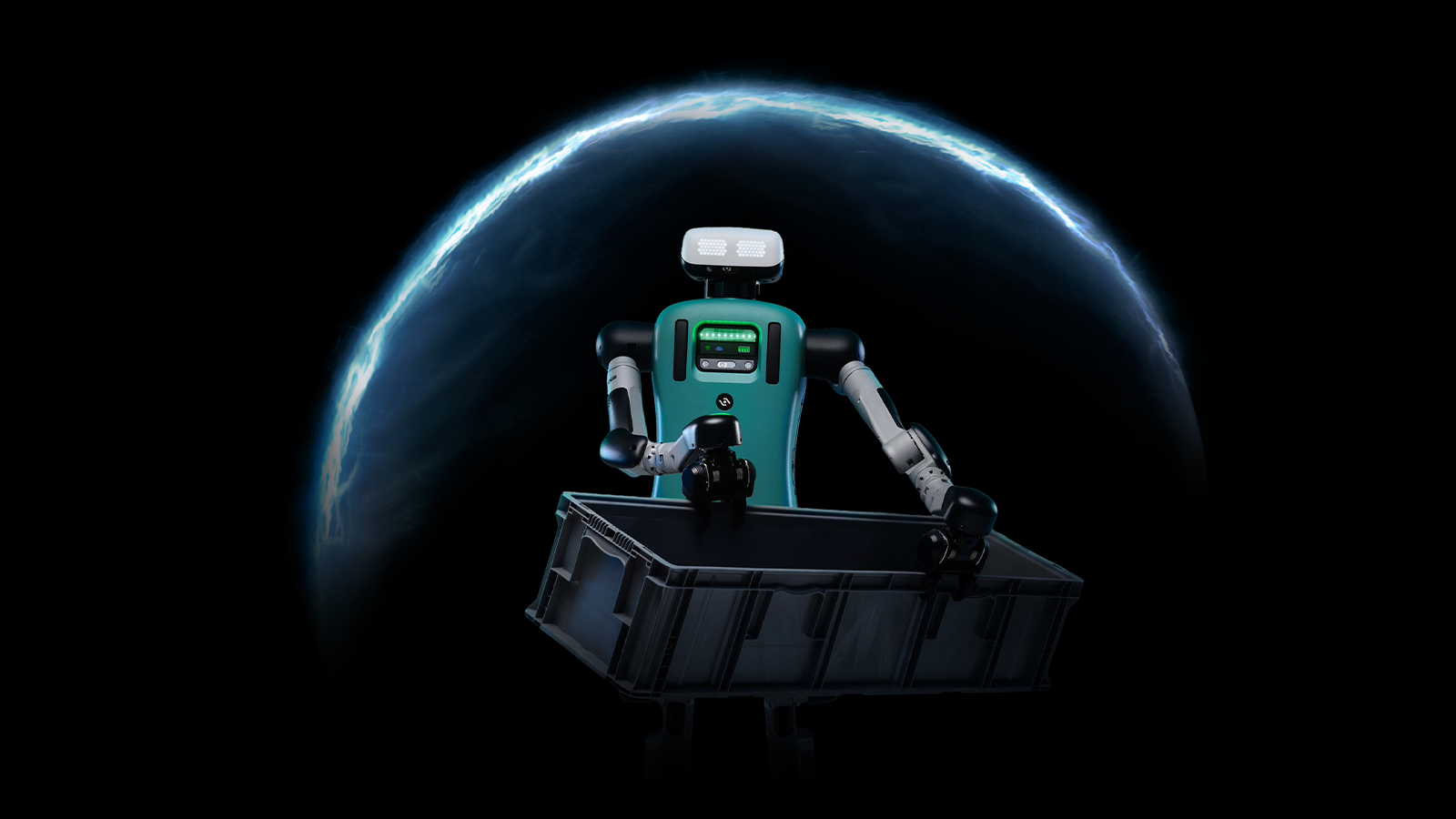
This is more than another robotics demo. Humanoid systems such as Agility's Digit are not meant to work only in videos, but in warehouses, factories and logistics centers beside people. In those places, safety is not an optional extra. It is the prerequisite.
What Halos actually does
According to NVIDIA, Halos for Robotics has several layers. IGX Thor and Holoscan Sensor Bridge provide industrial compute and sensor connectivity. Halos OS provides safety functions and applications. An Outside-In Safety Blueprint uses external cameras and AI agents to dynamically control robot behavior in industrial spaces.
There is also an inspection lab intended to help partners prepare for certification. NVIDIA names IEC 61508, ISO 13849 and ISO/IEC TR 5469 as relevant standards. The first named partner is Agility, which plans to integrate elements of Halos into its safety system for Digit.
Why it matters
Robotics AI is leaving protected lab environments. A humanoid robot in a logistics aisle is different from a classic robot arm behind a fence. It moves through spaces where people, forklifts, pallets and other machines constantly change the situation.
The strategic point is that NVIDIA is not building the robot body. It is building the layer underneath. Whoever controls the safety architecture, sensor pipeline, developer access and certification path can become as important in robotics as GPUs became in AI training.
In plain language
Think of a driving school. A car needs an engine and a steering wheel, but road use also needs mirrors, brakes, rules, a driving test and maintenance. For humanoid robots, Halos is an attempt to package that safety world into a technical toolkit.
A practical example
A warehouse tests 20 humanoid robots for visual inspections and simple transport tasks. During each shift, 60 people walk through the same aisles. Without external sensors, a robot may only stop when its own cameras see an obstacle. With an outside-in system, ceiling cameras could detect a blocked aisle earlier, slow robots down and automatically re-plan a task. That does not create science fiction; it prevents near misses.
Scope and limits
First, Halos does not prove that humanoid robots are now economical at mass scale. Gripping, carrying, battery life and maintenance remain hard problems.
Second, early access is not a finished standard. Developers, certifiers and operators still need to prove these systems in real environments.
Third, a unified stack can create dependency. If safety, compute and sensor architecture are strongly tied to one vendor, customers must examine portability and auditability.
SEO & GEO keywords
NVIDIA Halos, Robotics Safety, Physical AI, Humanoid Robots, Agility Digit, IGX Thor, Holoscan Sensor Bridge, Halos OS, industrial automation, warehouse robotics, functional safety, ISO 13849
💡 In plain English
Humanoid robots need more than good movement. Halos tries to break safety into hardware, sensors, software and inspection before these systems work beside people.
Key Takeaways
- →NVIDIA announced Halos for Robotics on June 22, 2026, at Automate in Chicago.
- →The system connects AI compute, sensor connectivity, Halos OS, safety applications and inspection processes.
- →Agility is named as the first partner and plans to use elements for its Digit humanoid robot.
- →The early access status shows that much of this is still developer and certification work, not a finished mass standard.
- →The story matters because robotics AI is moving from simulation into warehouses, factories and logistics.
FAQ
Is NVIDIA building its own humanoid robots now?
No. NVIDIA is positioning itself as a safety, compute and software platform for robotics partners.
Is Halos broadly available already?
NVIDIA describes Halos Core and the Outside-In Safety Blueprint as early access for registered developers.
Why does this matter?
Robots working beside humans need inspectable safety architecture. Without such standards, scaling remains risky.