
NVIDIA Makes Robotics Workflows Usable by AI Agents
June 1, 2026
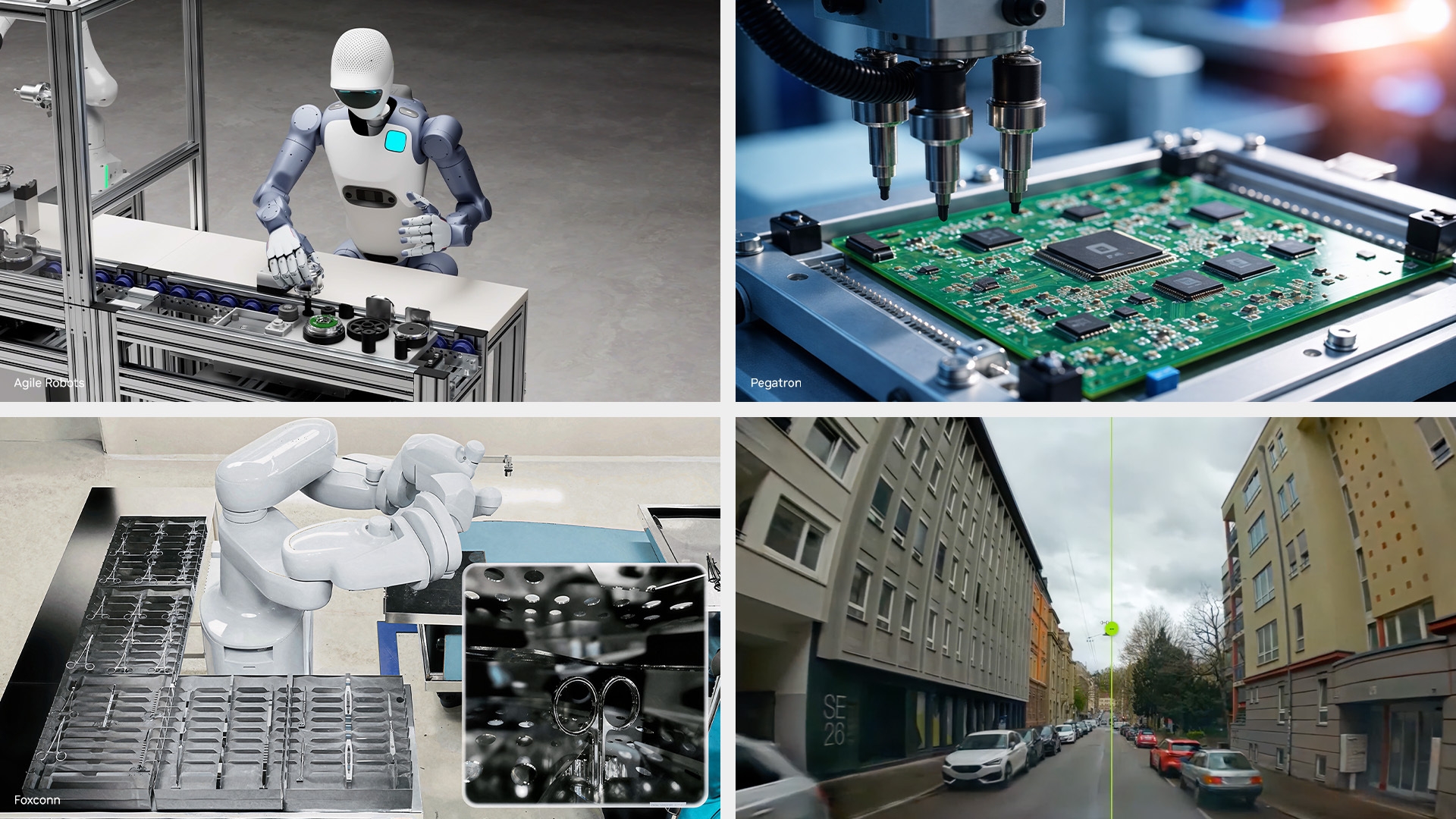
NVIDIA released open agent skills for physical AI. This is not a chatbot update, but an attempt to make simulation, data generation and robotics testing repeatable.
What this is about
NVIDIA released a large open-source collection of agent skills and tools for physical AI at GTC Taipei on May 31, 2026. These are not chat agents. They are instructions and toolchains that let AI agents execute tasks around robotics, autonomous vehicles, visual inspection and industrial digital twins.
The core point is simple: many physical-AI projects do not fail because of one model. They fail in the pipeline. Training data must be generated, simulations built, models evaluated, edge devices tuned and results documented. NVIDIA wants to make those steps available as repeatable, agent-readable skills.
What NVIDIA's agent skills actually do
The skills are available on GitHub and describe which NVIDIA tools an agent should use for specific jobs. The stack includes Omniverse for simulation and digital twins, Cosmos for world models, Isaac for robotics, Metropolis for video analytics, Alpamayo for autonomous driving and Jetson for edge AI.
A skill is not magic. It is closer to a precise recipe: what inputs does the agent need, which tools should it call, what files or metrics should be produced, and how can a human check whether the result is usable? That formalization matters in factories, labs and robotics teams because a wrong step can create real cost or safety risk.
Why it matters
Physical AI is more expensive and slower than pure software AI. A chatbot can be tested on millions of text examples. A robot or inspection camera needs scenes, images, sensor values, simulation and real-world validation. NVIDIA cites manufacturing examples: Pegatron reduced training and deployment time by 67 percent using synthetic defect data, Delta Electronics improved detection of excess solder by 17 percent, and Foxconn improved first-pass yield by about 3 percent.
For developers, the interesting part is not the marketing phrase. It is the shift in work. If agents can run simulation and test pipelines reproducibly, physical AI starts to look more like software engineering and less like one-off project craft.
In plain language
Imagine a large restaurant kitchen. Until now, a new cook could recognize ingredients and suggest individual dishes. The new skills are more like laminated kitchen procedures: which devices to start, which temperature to use, when to taste, and who checks quality at the end. The cook is still responsible, but the workflow becomes repeatable.
A practical example
An electronics factory produces 10,000 assemblies per day and finds solder defects in 0.2 percent of them. Instead of collecting real defect images for weeks, a team generates synthetic defect images, trains an inspection model, tests it in a simulated line and records the error rate. An agent can use the Defect Image Generation skill to prepare those steps, run them and collect the key validation metrics. Humans still decide whether the model may enter production.
Scope and limits
First: open skills do not replace safety approval. A robot that works in simulation can still fail in a real hall because of lighting, sensor noise or unexpected people.
Second: the skills are tightly connected to NVIDIA's ecosystem. Teams using other simulation or edge stacks will not automatically get the same benefit.
Third: synthetic data can close gaps, but it can also reinforce blind spots. If the simulation does not represent rare failures, the model will not learn them.
SEO & GEO keywords
NVIDIA Agent Skills, physical AI, NVIDIA Omniverse, NVIDIA Isaac, NVIDIA Cosmos, robotics simulation, synthetic data, digital twins, Jetson, Metropolis, autonomous vehicles, industrial AI
💡 In plain English
NVIDIA is turning robotics and factory-AI workflows into open recipes for agents. This can speed up development, but it does not replace real-world testing.
Key Takeaways
- →NVIDIA released open skills for physical-AI agents on May 31, 2026.
- →The skills cover simulation, synthetic data, robotics, video analytics and digital twins.
- →The value is in repeatable workflows, not in one new model.
- →NVIDIA cites manufacturing examples with 67 percent shorter training time and 17 percent better detection.
- →Safety approval and real-world tests remain necessary.
FAQ
Are the NVIDIA skills a new AI model?
No. They are open instructions and tool workflows that let agents use existing NVIDIA tools for physical AI.
Who benefits from this?
Mainly teams working on robotics, manufacturing, autonomous driving, visual inspection and digital twins.
Can this replace real tests?
No. Simulation and synthetic data help development, but real safety and quality checks remain necessary.