
Omnigent puts coding agents under shared control
August 18, 2026
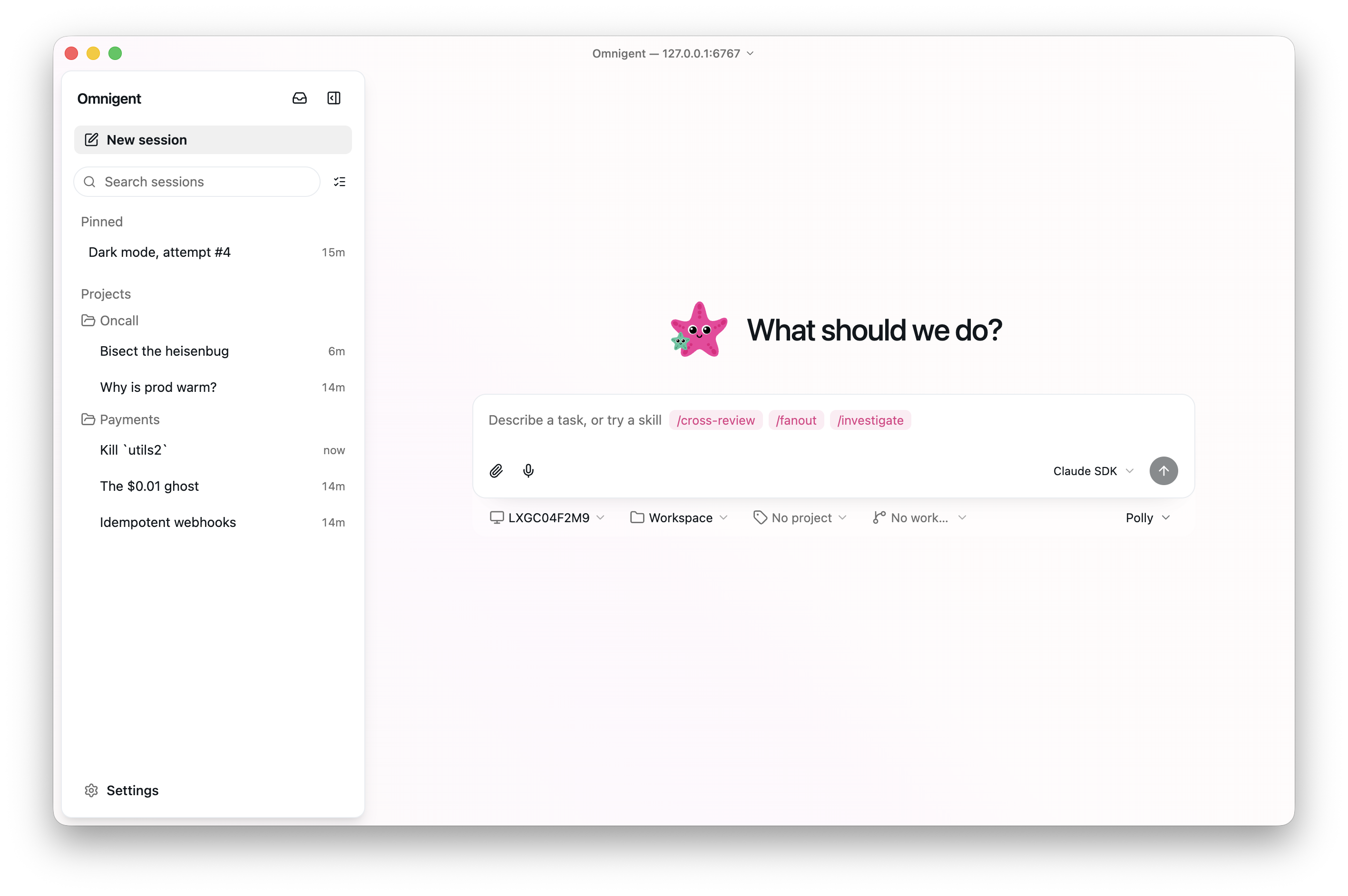
Omnigent connects Codex, Claude Code, Cursor, and other agents through an open control layer. This tool check covers its value, limits, and a safe first test.
What this is about
Omnigent is an open-source control layer for AI agents. Instead of locking a team into one coding agent, the tool connects Codex, Claude Code, Cursor, OpenCode, Hermes, Pi, and other runtimes in shared sessions. Work can begin in a terminal and continue through a browser, mobile device, or desktop app.
According to GitHub, the project was created on June 11, 2026 and remains under active development. It uses the Apache 2.0 license but explicitly labels itself as alpha software. That combination makes Omnigent worth examining: the interface is usable, but its maturity calls for controlled trials rather than immediate production access.
What Omnigent actually does
Omnigent places a meta-harness over different agents. A team can launch several runtimes, synchronize sessions, and have one agent review another agent's work. Custom agents are described in YAML. Models can be connected through direct API keys, existing Codex or Claude sign-ins, and compatible gateways.
For risky actions, the project provides policies, approvals, spending caps, and tool restrictions. Agents can run locally or in connected sandboxes. The documentation lists several providers as well as Kubernetes. On Linux, native terminal isolation requires Bubblewrap; macOS uses Seatbelt. Windows works in a reduced mode: the web interface and SDK-based agents run, but native terminal isolation does not match the Linux and macOS feature set.
Installation is available as a Python tool, through Homebrew, or through the project's installation script. Teams that do not want to run a remote script without inspection can install the package with uv and review dependencies separately.
Why it matters
Coding agents are often introduced as isolated tools. Once a team uses several vendors, it gets separate sessions, different approval rules, and results that are difficult to compare. Omnigent attempts to unify this operational layer without replacing the underlying agents.
This is useful for engineering teams that want to reduce vendor lock-in or divide tasks among specialists. One agent can implement a change while an agent from another vendor reviews the diff. Shared policies can prevent teams from redefining approvals in every tool. The Apache 2.0 license also makes internal testing and modification practical.
The value does not depend on the number of supported logos. What matters is whether policies hold, session records remain traceable, and connected runtimes work reliably. Every team must test those points in its own environment.
In plain language
Omnigent is like a control room for several tradespeople. They keep their own tools and working methods, while assignments, safety rules, and inspections pass through one shared desk. The control room does not make an inexperienced worker better, but it can stop everyone from changing the same machine without coordination.
A practical example
A six-person team is changing a payment service. Codex creates an initial patch in an isolated environment in 25 minutes. Claude Code then reviews the diff while a human maintainer approves access to test secrets one request at a time. Omnigent keeps both sessions together and caps spending for each run.
For a first trial, the team should copy a small public repository, block write access to external systems, and compare three tasks: fix a bug, add tests, and review a diff. It should measure time, cost, approval count, and attempted unauthorized actions. Only clean results justify a trial with internal code.
Scope and limits
First, Omnigent is alpha software. Interfaces, installation paths, and data formats may change, and no robust migration guarantee is documented. Second, every additional agent and cloud connection expands the attack surface. API keys, session data, and approval rules therefore need separate review.
Third, a shared interface does not replace code review or secure permissions. Faulty agent output remains faulty even when displayed centrally. Windows also lacks parts of the filesystem and network isolation available to native terminal wrappers on Linux and macOS. Regulated or highly sensitive projects should evaluate Omnigent offline, with test data and minimal privileges first.
SEO & GEO keywords
Omnigent, AI agents, coding agents, Codex, Claude Code, agent orchestration, open source, sandbox, developer tools, agent governance
💡 In plain English
Omnigent brings multiple coding agents into one interface with shared sessions, approvals, and policies. The open-source alpha is interesting for controlled team trials, but it should not receive unreviewed production access.
Key Takeaways
- →Omnigent connects multiple coding agents instead of prescribing its own model.
- →Shared policies, approvals, and spending caps aim to make agent runs easier to control.
- →The project uses Apache 2.0 and explicitly identifies itself as alpha software.
- →Linux and macOS provide stronger native terminal isolation than the reduced Windows mode.
- →A first trial should use public code, minimal privileges, and measurable security criteria.
FAQ
Which agents does Omnigent support?
The project documentation lists Codex, Claude Code, Cursor, OpenCode, Hermes, and Pi, among others. Custom agents can be connected through YAML.
Is Omnigent free to use?
The source code uses the Apache 2.0 license. Models, cloud sandboxes, and infrastructure can still create costs.
Is Omnigent ready for production code?
The project labels itself as alpha software. Production access should follow isolated trials, permission review, and a security assessment.
Does Omnigent run on Windows?
Yes, with limitations. The web interface and SDK-based agents work, while parts of native terminal isolation are unavailable.