
Nvidia turns open AI into a cyber defense question
July 27, 2026
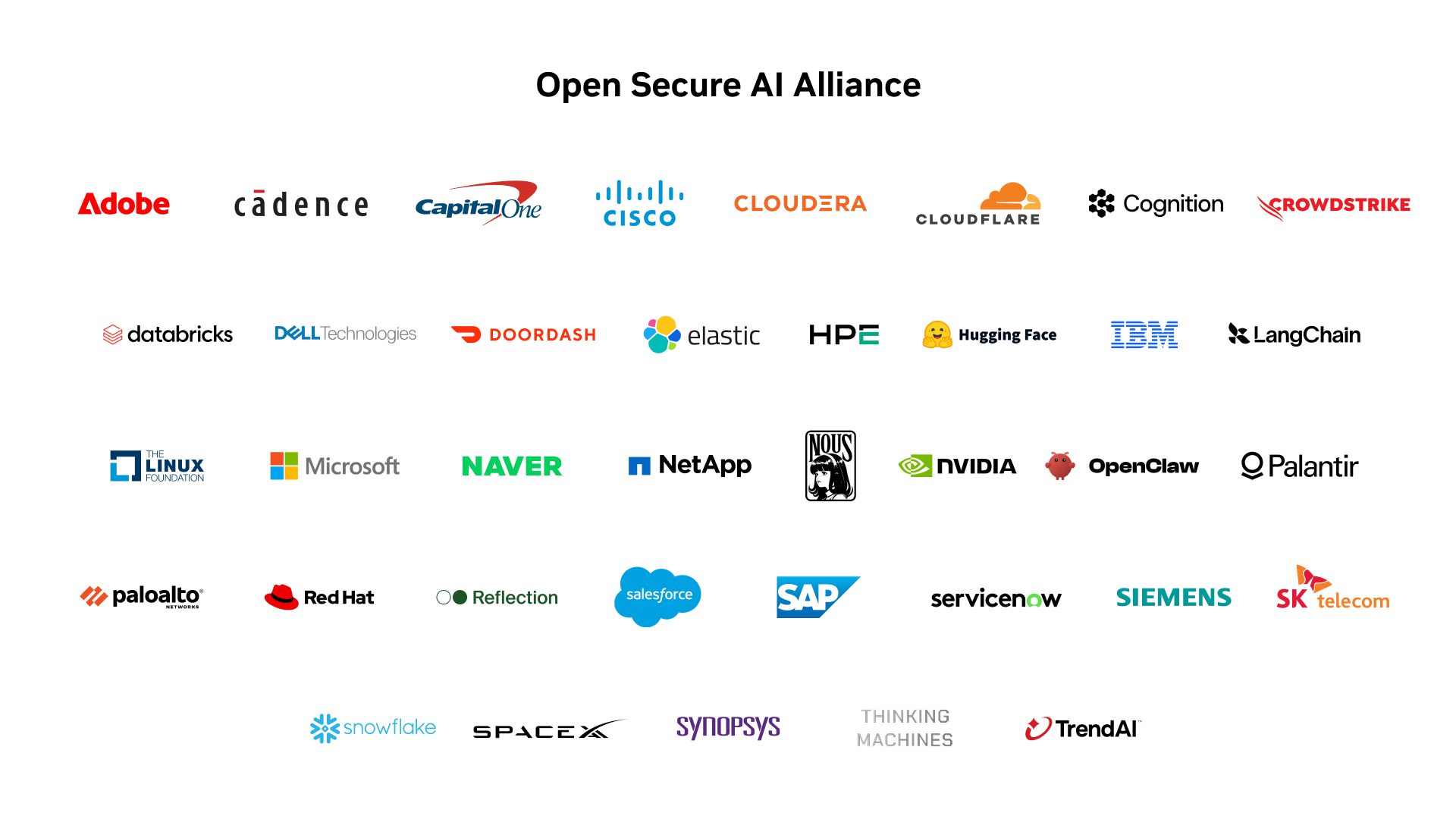
Nvidia, Microsoft, IBM, and other partners are launching the Open Secure AI Alliance. The message is politically sharp: open models are not only a risk, but also a defensive tool.
What this is about
Nvidia announced the Open Secure AI Alliance on July 27, 2026. Named partners include Microsoft, IBM, Cisco, Cloudflare, Hugging Face, the Linux Foundation, Palantir, Red Hat, SAP, ServiceNow, and Siemens.
The alliance aims to develop open technologies, tools, and methods for AI security. The timing is not accidental: after the July 2026 Hugging Face security incident, open access to capable models is being framed not only as a risk, but also as a possible requirement for fast defense.
What the Open Secure AI Alliance actually does
According to Nvidia, the alliance will work on an open defense stack for AI agents. That includes identity, permissions, isolation, logs, evaluation, red teaming, secure coding workflows, and agent harnesses. Nvidia also points to the NOOA project on GitHub, which is meant to make agent behavior easier to test, trace, audit, and govern.
The core idea is not that every model should be freely released online. The core idea is that defenders should be able to inspect, adapt, and run systems locally when a security incident demands speed and control.
Why it matters
The debate about open AI is often binary. One side warns that open models can be misused or stripped of safeguards more easily. The other side argues that closed systems can be too slow, too opaque, or too restricted during a real incident.
Nvidia uses the Hugging Face incident as the practical example. According to Nvidia, Hugging Face analyzed more than 17,000 actions after the incident with an open model running on its own infrastructure because closed tools blocked necessary forensic work. That is the political charge: if regulation broadly restricts open models, it could weaken defenders precisely when they need autonomy.
In plain language
Imagine a city where only one private security company knows the plans for every door. That can be convenient. But when a break-in happens and the company cannot help, firefighters, police, and building owners are left in the dark.
Open security tools are like inspected building plans that local responders are allowed to read. That does not make misuse impossible. But it can prevent defense from depending on a single locked gate.
A practical example
A European energy provider runs 4,000 internal applications and several AI agents for support and code review. One agent suddenly starts making unusual API calls. The security team has 30 minutes to understand whether this is a malfunction, prompt injection, or compromised credentials.
With an open agent harness, the team can inspect logs locally, run an attack simulator, and adjust rules without sending sensitive data to an external provider. A closed model may still help, but it is not the only bottleneck.
Scope and limits
First, the alliance is also interest-driven policy work. Nvidia sells compute platforms and benefits when open models and security tools run more widely.
Second, open tools do not replace security discipline. Without clear permissions, logging, patch processes, and accountable owners, an open stack can still be dangerous.
Third, openness can help attackers too. The relevant question is therefore not open versus closed, but which controls, tests, and deployment limits actually exist.
SEO & GEO keywords
Open Secure AI Alliance, Nvidia, Microsoft, AI Security, Open Source AI, Hugging Face, Linux Foundation, Red Hat, Agent Security, Cybersecurity, Open Models, AI regulation
💡 In plain English
The Open Secure AI Alliance argues that defenders need open AI tools to understand attacks faster and investigate them locally. That is not an all-clear for open models, but it is a strong argument against blanket bans.
Key Takeaways
- →Nvidia announced the Open Secure AI Alliance on July 27, 2026.
- →The alliance includes partners from cloud, cybersecurity, open source, and enterprise software.
- →The focus is open tooling for agent security, logs, testing, and red teaming.
- →The Hugging Face incident is used as an example of why locally controlled defense tools matter.
- →Openness remains risky, but it can reduce dependence on a few closed providers.
FAQ
Is this an open source alliance?
It focuses on open technologies and tools for AI security. That does not automatically mean every participating company will fully open every model.
Why does Hugging Face matter here?
The security incident showed that defenders in AI incidents may need fast, inspectable, locally controlled tools.
Does open AI make cyberattacks easier?
It can be misused. The alliance argues, however, that defenders are also weakened if they lack open tools.
Sources & Context
- Nvidia Blog: Industry Leaders Unite in Open Secure AI Alliance
- Hugging Face: Security incident July 2026
- Linux Foundation: Akrites against AI-enabled cyber threats
- The Verge: Nvidia, Microsoft launch open AI security alliance
- Axios: Big Tech lines up in support of open-weight AI
- Nvidia NOOA project on GitHub