
OpenAI o3 helps doctors find 18 rare diagnoses
June 20, 2026
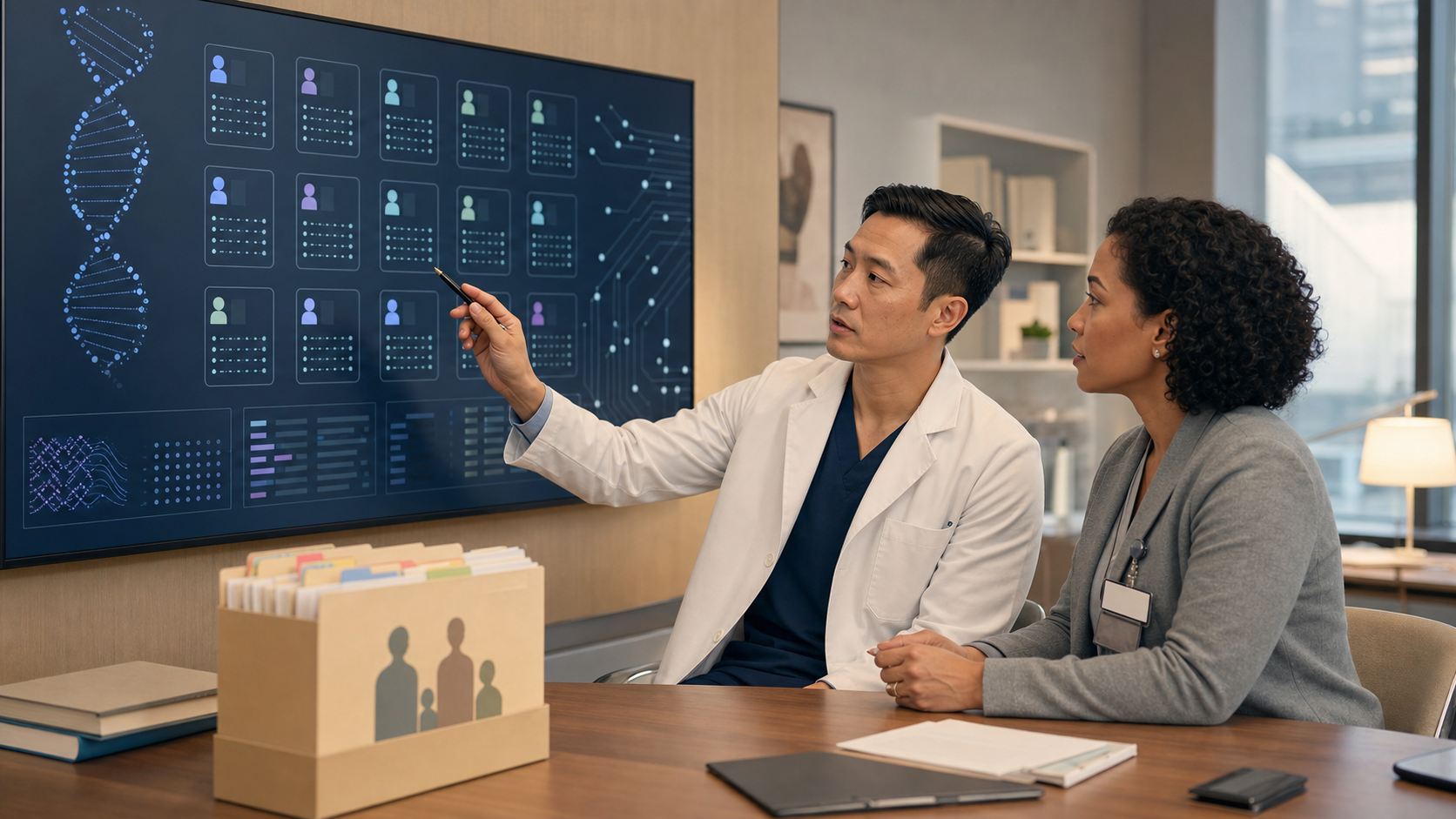
Boston Children’s, Harvard, and OpenAI reanalyzed 376 unsolved pediatric genome cases. After expert review and lab confirmation, 18 families received a diagnosis.
What this is about
OpenAI, Boston Children’s Hospital, and Harvard University researchers published a NEJM AI study on June 18, 2026 that shows a concrete medical use for language models: not a chatbot doctor, but a research assistant for specialists.
The team used OpenAI o3 Deep Research to reanalyze 376 previously reviewed but still unsolved pediatric rare-disease cases. After review by physicians, genetic specialists, and laboratories, 18 cases received confirmed diagnoses. That is a 4.8 percent additional yield in a group that had already gone through specialist review, sequencing, and established pipelines.
What the AI reanalysis actually does
The researchers did not feed the model open-ended patient chats. They prepared de-identified packets: clinical features encoded as Human Phenotype Ontology terms, occasional notes, age, gender, and filtered variant tables. The model was asked to propose a plausible molecular explanation and justify it.
The important part came next. A model suggestion did not count as a diagnosis. At least two specialists reviewed candidates, used clinical ACMG/AMP criteria, confirmed relevant variants in a CLIA-certified laboratory, and returned results to families only after that process.
Why it matters
Rare diseases are individually uncommon but collectively a large care problem. OpenAI notes that many people remain undiagnosed even after genomic sequencing. ABC News, covering the study, points to more than 30 million affected people in the United States, about half of them children.
The value is not a dramatic replacement for physicians. It is the ability to revisit old cases. Genomic data does not age, but the knowledge around it does: new genes are described, variants are reclassified, case reports appear, and databases change. A model can help specialists sort those scattered clues.
In plain language
Imagine a very large, messy toolbox. An experienced craftsperson knows how to fix things, but cannot keep every screw head, special wrench, and new instruction sheet in mind at once. The AI is not the craftsperson. It is a fast sorting helper saying: look again at these three tools.
A practical example
A children’s hospital has 10,000 old genome cases in its archive. 1,000 remain unresolved after first analysis. Every year, new papers and database entries appear. A team might manually revisit 100 of those cases per quarter. With AI-assisted pre-analysis, it might expand that to 400 cases, as long as every candidate list is reviewed by specialists and confirmed in a lab.
If 4.8 percent of cases produced an answer, that would mean 19 additional diagnoses per 400 reviewed cases in this example. That is not a cure-all, but for individual families, finally having a name after years of uncertainty can matter enormously.
Scope and limits
First, the study was retrospective. It does not prove the workflow will perform the same way in ordinary clinical settings tomorrow.
Second, the researchers did not systematically measure time saved, cost, extra review burden, or false leads. A model can produce plausible explanations that fail under scrutiny.
Third, the approach does not replace sequencing, privacy controls, genetic counseling, or medical responsibility. It works only if clinical review remains strong.
SEO & GEO keywords
OpenAI o3, Boston Children’s Hospital, NEJM AI, rare disease diagnosis, pediatric genetics, genome reanalysis, Human Phenotype Ontology, CLIA laboratory, medical AI, diagnostic odyssey
💡 In plain English
The study shows AI as a search aid for specialists: it proposes possible causes in old, unsolved genome cases. Humans still make the diagnoses, using clinical rules and lab confirmation.
Key Takeaways
- →376 previously unsolved pediatric cases were reanalyzed.
- →18 cases received a diagnosis after expert review and lab confirmation.
- →The added yield was 4.8 percent in a heavily reviewed group.
- →The model produced hypotheses, not clinical decisions.
- →Prospective studies still need to measure effort, cost, and false leads.
FAQ
Did the AI diagnose patients?
No. The model suggested candidates. Clinical experts reviewed the evidence, and laboratories confirmed findings.
Why does 4.8 percent matter?
These cases had already remained unsolved after prior expert review. In that group, even a small added yield can matter.
Can people use ChatGPT for diagnosis now?
No. The study does not describe a consumer or clinical self-diagnosis workflow.
What is still missing?
Prospective studies on time, cost, false positives, privacy, and everyday clinical value.
Sources & Context
- OpenAI: Using AI to help physicians diagnose rare genetic diseases affecting children
- NEJM AI: LLM-Assisted Reanalysis of Unsolved Rare Disease Genomes
- ABC News: AI model helps some patients get diagnoses after years of uncertainty
- Boston Children’s Hospital: Manton Center for Orphan Disease Research
- NIH: Genetic and Rare Diseases Information Center