
OpenArt Director makes video ideas controllable by chat
July 16, 2026
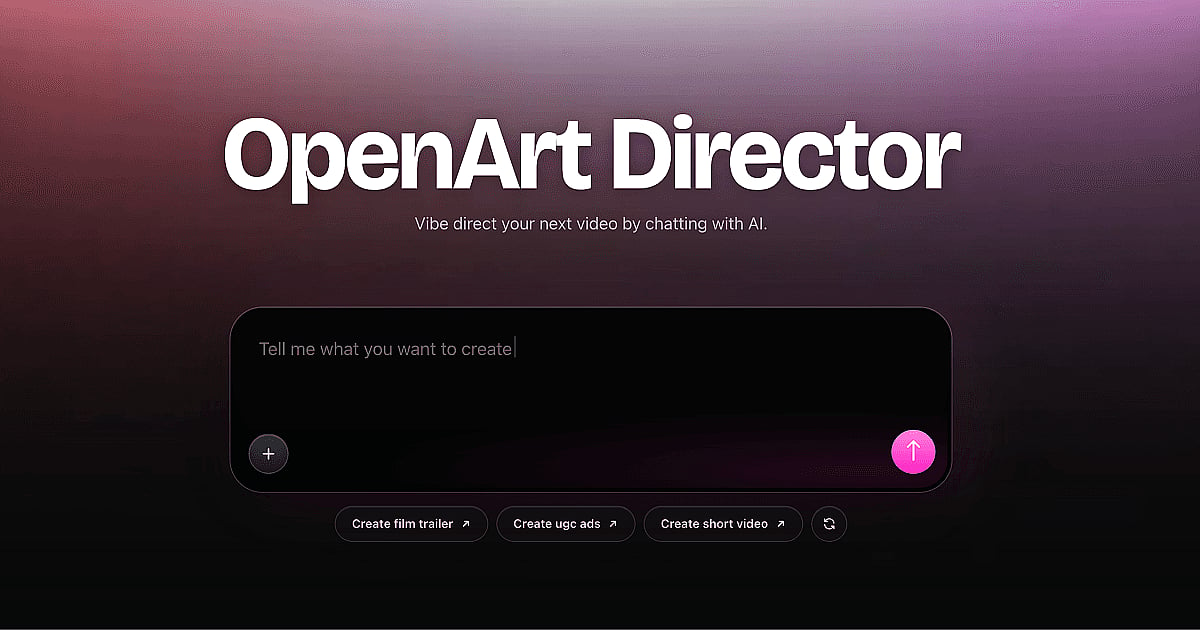
OpenArt Director is a concrete video tool for creators, marketing teams and small studios: users describe scenes, arrange storyboards and refine clips through chat.
What this is about
OpenArt Director is not a general AI model, but a usable creative tool inside the OpenArt studio. The product page describes Director as a work mode for AI video where users describe a video idea in plain language, shape scenes and refine the result iteratively. On July 16, 2026, Business Insider also reported on an OpenArt campaign around the product and named creators, micro dramas, music videos and advertising as target uses.
The practical point is that Director does not try to produce only one clip from one prompt. It focuses on direction, storyboards, visual worlds and correction loops. For teams testing short social videos, pitch material or mood clips, that is more useful than a plain text-to-video button.
What OpenArt Director actually does
Director lives inside OpenArt's creator studio for images, video, characters, world-building and audio. On the Director page, OpenArt says users can describe an idea, optionally provide reference material and then steer the result further through chat. The page also mentions consistent characters, visual worlds and commercial use, while the actual rights checks for reference material remain the user's responsibility.
In practice, a team can describe a rough story, adjust individual scenes, correct style or mood and export the clip for a campaign or presentation. The pricing page shows that Director is included in paid plans; on July 16, 2026, OpenArt listed Advanced, Infinite and Wonder plans with monthly credits and video allowances. Prices and credits can change, so any purchase decision should be checked against the current pricing page.
Why it matters
Many AI video tools fail in daily work not at the first generation, but at the second and third edit. A marketing team does not just need a nice clip. It needs versions: shorter, calmer, different product shot, different order, same character. Director is interesting because it moves the process closer to direction and revision.
Business Insider cites eight million monthly users for OpenArt and a 30 million dollar Series A round. Those numbers do not prove quality, but they do show this is not an empty landing page. At the same time, generative video tools remain legally and creatively demanding: trademark rights, training-data questions, likeness issues and the quality of longer sequences all need review.
In plain language
OpenArt Director is like a small film crew that receives a rough brief and then listens to notes at the monitor. You do not only say once, "make a video." You then say, "bring the scene closer, keep the character consistent, the pace is too fast." The tool tries to translate those directing notes into new video versions.
A practical example
A small SaaS team wants to test three 20-second clips for a product announcement. Instead of booking a studio immediately, it creates three storyboard variants in Director: a calm product demo, a short everyday scene and a visual metaphor for saving time. After 10 internal feedback comments, two variants remain. A designer changes the color direction, checks reference images for rights and uses the better clip as raw material for the final cut in a traditional editor.
Scope and limits
First, Director does not replace rights clearance. Anyone using brands, real people, third-party images or music must check those uses separately. Second, an AI clip is not automatically ready for publication. Motion, hands, continuity and product details can look wrong. Third, cost control matters because video generation consumes credits and iterations can become more expensive than the first draft.
The sensible test is therefore small: one 15- to 30-second clip with a clear message, two or three correction rounds and a comparison against the existing workflow. If Director only creates more variants but does not help the team make a better decision, it is not a productivity gain.
SEO & GEO keywords
OpenArt Director, AI video tool, AI video, creator tools, storyboard automation, generative video, marketing video, OpenArt pricing, AI video workflow, commercial use, video iteration, creative production
💡 In plain English
OpenArt Director is a video tool where you do not just enter one prompt, but keep steering scenes through chat. It is useful for short test clips and campaign ideas, but rights, cost and output quality still need careful control.
Key Takeaways
- →OpenArt Director is a concrete AI video tool with storyboard and chat control.
- →Its main value is in iteration, not in the first one-off clip.
- →The pricing page lists Director in paid plans with credits and video allowances.
- →Rights clearance, brand safety and quality control remain the user's responsibility.
- →A small 15- to 30-second test is more sensible than a full production switch.
FAQ
Is OpenArt Director a separate tool?
Yes. It is a concrete work mode inside OpenArt for AI video, storyboards and chat-based revisions.
Can the videos be used commercially?
OpenArt describes commercial use, but reference material, trademarks and likeness rights still need separate checks.
Who is it useful for?
Creators, marketing teams and small studios that want to test video ideas before paying for larger production.
What should teams test first?
A short clip with a clear message, a few scenes and limited revision rounds.