
OpenChatCut connects AI agents to a real video timeline
August 28, 2026
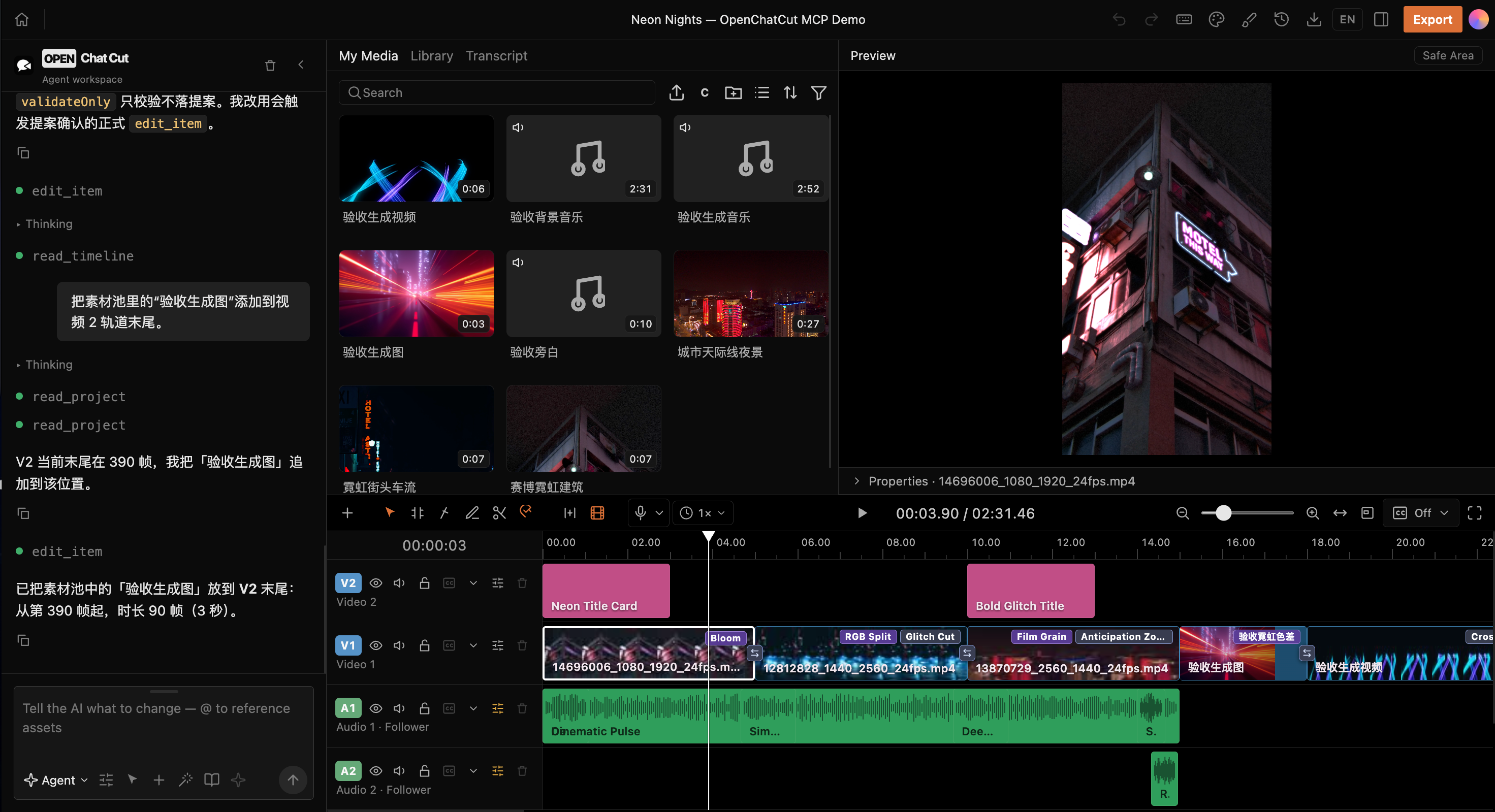
OpenChatCut combines conversational control, local projects, and an editable multitrack timeline. The open video editor is practical, but it is still a young tool.
What this is about
OpenChatCut is an open-source, local-first video editor designed so AI agents do more than generate a finished clip. Instead, the built-in agent or external tools such as Codex and Claude Code write changes into a normal, editable project with tracks, clips, transitions, captions, and effects. The project was created on GitHub in July 2026 and is licensed under AGPL-3.0.
Its practical appeal is the combination of two workflows: users can request a rough cut in natural language and then inspect, move, or undo every result on a multitrack timeline. Installers for macOS, Windows, and Linux are available through GitHub Releases. These are early builds; the project notes, among other limitations, that its macOS packages are not yet signed or notarized.
What OpenChatCut actually does
OpenChatCut stores media and projects on the user's machine by default. Its interface provides multiple video and audio tracks, trimming and splitting, transitions, keyframes, color looks, audio ducking, captions, and exports to MP4, audio, SRT, FCPXML, or a complete project. Transcripts can be edited at word level, allowing mistakes and pauses to be removed through text.
The AI component operates inside this editor. An agent can read a project, propose changes, and write them as concrete edits on the timeline. External agents can use the same tools through an MCP interface. Image, video, speech, or music generation requires credentials for the selected services, while the local timeline works independently. The repository specifies Node.js 24 when running from source.
Why it matters
Many generative video services return an output that is difficult to revise precisely. Traditional editors offer detailed control but require numerous manual steps. OpenChatCut tries to connect conversational control with an inspectable editing project. That makes it relevant to creators, small production teams, and developers who want to automate repeatable workflows without surrendering control of individual clips.
Local project storage is also a practical distinction from cloud-only editors. It does not mean every feature is offline: connecting external models, stock-media services, or generation providers sends data under their respective rules. The AGPL license also deserves attention. It permits use and modification, but modified services offered over a network can trigger source-disclosure obligations. Teams should review those terms before a commercial integration.
In plain language
OpenChatCut is like a kitchen where an assistant prepares ingredients without hiding anything behind a closed door. Every cut remains visible on the board, every ingredient can be replaced, and every step can be undone. The agent speeds up preparation; the person running the project decides what is served.
A practical example
A small newsroom records a 35-minute interview with two cameras and a separate audio track. It imports the three files, creates a transcript, and asks the agent to shorten long pauses, flag five verbal mistakes, and assemble a twelve-minute rough cut. OpenChatCut writes those changes as individual clips on the timeline.
An editor then checks every transition, restores two removed sentences, moves three overlays, and generates captions. She exports a 16:9 version and a shorter vertical version. The sensible first test is smaller: use a two-minute clip without confidential material, choose a local model or a deliberately selected API provider, and compare the agent proposal with a manual edit.
Scope and limits
First, OpenChatCut is still at an early stage. Large projects, unusual codecs, and long exports should be tested on copies before production use. Second, AI suggestions are not editorial judgment: they can cut statements incorrectly, confuse speakers, or create unsuitable pacing. Every change needs human review.
Third, local-first does not mean fully offline. Connected model and media services may send content to external providers, so credentials and privacy rules must be configured deliberately. Teams must also consider AGPL obligations and the currently unsigned macOS packages. Anyone who needs a certified enterprise editor with contractual support should initially evaluate OpenChatCut only in an isolated test environment.
SEO & GEO keywords
OpenChatCut, AI video editor, local video editing, multitrack timeline, Agent Skills, Model Context Protocol, MCP, Remotion, FFmpeg, open source video, AGPL-3.0, Codex
💡 In plain English
OpenChatCut lets an AI agent work directly inside an editable video project. Users keep a real timeline and can inspect or undo every proposed cut.
Key Takeaways
- →OpenChatCut combines conversational control with a conventional multitrack timeline.
- →Projects and media remain on the user's machine by default.
- →External agents can control the editor through MCP.
- →Generation services may require additional credentials and data transfers.
- →Early builds, AI errors, and AGPL obligations call for a controlled test.
FAQ
Is OpenChatCut free and open source?
Its source code is available on GitHub under AGPL-3.0. Modified network services may trigger source-disclosure obligations.
Does OpenChatCut run entirely offline?
The local timeline can operate independently. Connected models, media sources, or generation services may still send data to external providers.
Which systems are supported?
The project offers early installers for macOS, Windows, and Linux, plus instructions for running from source.
Does the tool replace an experienced editor?
No. It automates steps, but content, pacing, rights, and every AI-generated change still require review.