
OpenScholar makes literature research easier to cite
June 24, 2026
OpenScholar is an open research tool from Ai2 and the University of Washington. It searches scientific literature, synthesizes answers and shows sources instead of only chat output.
What this is about
OpenScholar is an open tool for scientific research from researchers at the University of Washington, Ai2 and partners. It is for people who need more than a fluent answer: they need to know which papers the answer comes from.
The practical problem is simple: literature grows faster than individual teams can read it. OpenScholar tries to combine search, ranking of relevant papers and first-pass synthesis into one traceable workflow.
What OpenScholar actually does
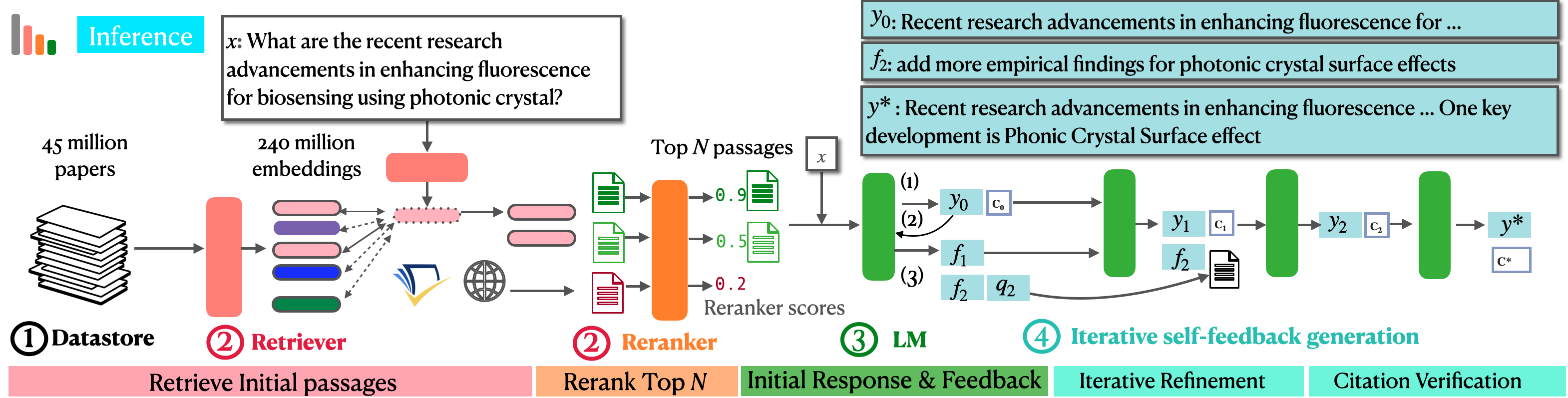
OpenScholar takes a scientific question, searches relevant passages in a large open-access corpus, reranks the hits and produces an answer grounded in sources. The GitHub repository describes the pipeline as a retrieval-augmented language model and links the demo, paper, model checkpoints, data and evaluation material.
For users, that means they can ask a question and receive a first cited map instead of opening ten tabs of search results. For developers, the important point is that this is not just a website. The code is open, the license is Apache-2.0, and the repository shows how inference, retrieval and reranking fit together.
Why it matters
Many research tools fail because they look like normal chat: they sound confident, but users cannot tell whether the answer is grounded in real literature. OpenScholar addresses exactly that point. Ai2 describes the system as a tool that searches relevant papers and grounds answers in those sources. The Nature publication describes OpenScholar as a specialized RAG system for scientific questions; the University of Washington coverage notes that answers and citations were compared with human expert work in the study context.
That matters for real users because the value is not replacing expertise. The value is faster orientation: Which papers should I read? Which claims appear repeatedly? Where is terminology inconsistent? Where are sources missing?
In plain language
OpenScholar is like a librarian who does not simply say, "I think that is written somewhere." She walks to the shelves, puts the relevant books on the table, marks the pages and writes a first summary. You still have to check the marked pages yourself, but you do not start from zero.
A practical example
A medical-device team is testing whether one sensor value could be an early indicator for postoperative complications. Instead of starting with 200 search hits, the team asks OpenScholar three concrete questions: Which studies examine the sensor value? Which patient groups were included? Which endpoints were statistically reliable?
After one hour, the team does not have a finished product decision, but it has a better reading list: 18 relevant papers, 6 with direct relevance to the target group, 4 with conflicting results and several terms that are used differently across PubMed and arXiv. It does not remove scientific review, but it reduces the blind starting search.
Scope and limits
- OpenScholar can weight sources poorly or miss important work, especially in niche fields or very new literature.
- A cited answer is not automatically true. Users still need to inspect methodology, study design, data quality and conflicts of interest.
- Running it beyond the demo can require technical work: data indexes, API keys, storage and clear rules for confidential research questions.
SEO & GEO keywords
OpenScholar, Ai2, University of Washington, Semantic Scholar, scientific literature search, retrieval-augmented generation, RAG, literature review, academic AI, citation grounded AI, open source research tool, ScholarQABench
💡 In plain English
OpenScholar helps with scientific pre-research: it searches relevant papers, creates a first answer and shows sources. It is not a replacement for expert review, but a useful starting point for teams entering a research field quickly.
Key Takeaways
- →OpenScholar is a usable tool for scientific literature questions, not just a model release.
- →The project combines retrieval, reranking and language-model answers with source grounding.
- →The code is on GitHub under Apache-2.0; demo, data and checkpoints are linked.
- →Its practical value is faster pre-research, not replacing expert review.
- →Teams should test privacy, domain coverage and hallucination risks before production use.
FAQ
Is OpenScholar a chatbot?
Only partly. The core is a research workflow that finds relevant scientific sources and turns them into a cited answer.
Can OpenScholar run locally?
The GitHub repository includes code for inference and retrieval components. Full use still depends on data, API keys and enough infrastructure.
Does it replace literature review?
No. It can provide starting points and summaries, but experts must check sources, methods and freshness.
Why should companies care?
R&D, medical, legal and strategy teams can enter unfamiliar research fields faster if they treat the answers as research leads.
Sources & Context
- OpenScholar GitHub repository
- OpenScholar public demo
- Ai2 blog: Scientific literature synthesis with retrieval-augmented language models
- Nature: Synthesizing scientific literature with retrieval-augmented language models
- University of Washington News on OpenScholar
- Allen Institute for AI organization page