
Plaud One turns conversations into input for AI agents
August 27, 2026
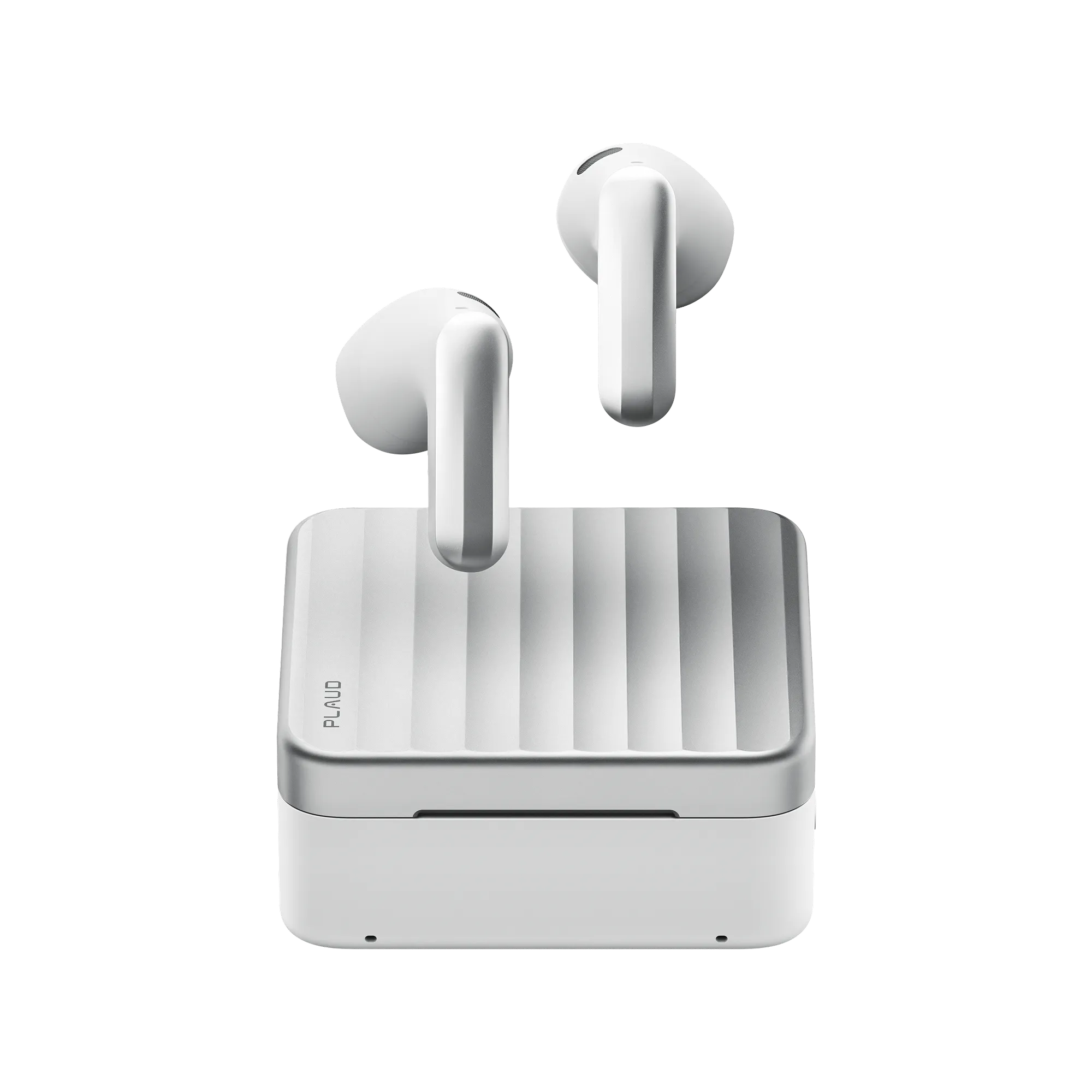
Plaud's new earbuds record and transcribe conversations and can turn them into tasks in Gmail, Calendar, Notion, or Slack. That is useful, but it raises the privacy stakes.
What this is about
Plaud One looks like a conventional pair of earbuds, but it is primarily a wearable conversation recorder connected to AI services. Plaud introduced the device on August 27, 2026. The Explorer Edition costs $249.99 according to the company and is expected to ship from late September in selected markets.
The notable part is not only in the ears. The charging case has microphones, its own storage, and a 4G connection through an eSIM. It can therefore upload and process conversations without a phone or Wi-Fi. A meeting is meant to produce more than a transcript: Plaud's agent can prepare a Gmail draft, create a calendar entry, or pass information to Notion and Slack.
What Plaud One actually does
Each earbud has three microphones, according to The Verge, and the earbuds provide 32MB of local storage in total. Plaud claims up to six hours of recording. The case adds four microphones, 512MB of storage, and a pickup range of up to five meters. The company gives a combined battery-life estimate of up to 36 hours with the case; TechCrunch reports a lower figure of up to 25 hours for recording. The difference is a reminder that battery life and continuous recording time are not identical.
Recordings are transcribed and summarized in Plaud's software. A button on the case or the “Hey Plaud” wake phrase starts a conversation with Plaud Agent. Integrations with Gmail, Google Calendar, Notion, and Slack are intended to turn spoken decisions into follow-up actions. However, TechCrunch reports that the broader agent features are due in a software update over the coming months. Buyers receive 300 free transcription minutes per month; additional plans start at $8.33 per month when billed annually, according to TechCrunch.
Why it matters
AI note-taking hardware has mostly taken the form of pins, cards, or phone accessories. Earbuds are more socially familiar and are already worn every day. Plaud says more than 2.5 million people use its hardware or software. That brings the question of whether conversations should become a continuous data source for AI to a much larger audience.
The benefit is tangible: users do not have to copy handwritten notes or manually move tasks into several services after a meeting. The exposure also grows. An eSIM makes the device independent of a phone, but it can make the upload process less visible and harder to supervise. Other people may not know whether someone is merely listening to music or recording the room. Laws differ by country and state, and recording a private conversation without every participant's permission can be illegal. A technically possible recording is not automatically lawful or socially acceptable.
In plain language
Plaud One is like a secretary who always carries a notebook and assigns tasks immediately after a meeting. The difference is that this notebook can transmit its contents over a mobile network. Before placing it on the table, everyone should know who is listening, where the notes go, and whether all participants consent.
A practical example
A project manager runs a 45-minute customer call. After obtaining explicit consent from all three participants, Plaud One records it, creates a transcript, and suggests five actions: two appointments, one email, a Notion record, and a Slack message. The manager reviews every action, corrects one misheard product name, and approves only the four relevant steps.
This may save 20 minutes of follow-up work. It also demonstrates safer use: visible consent before recording, human review before external actions, and no confidential data until storage location, deletion periods, and access rights are understood.
Scope and limits
- The announced agent capabilities are not yet fully available. Buying now partly relies on a promised software update.
- Transcription can misidentify names, numbers, and speakers. Generated emails or calendar events therefore need review before they are sent.
- Recordings always affect other people. The device should not be used in sensitive discussions, medical settings, or confidential negotiations without clear consent.
Plaud One is also not a substitute for an independent earbud review. As of August 27, 2026, there were no long-term independent tests of sound quality, comfort, cellular reliability, or real-world battery life.
SEO & GEO keywords
Plaud One, Plaud Agent, AI earbuds, conversation recording, AI transcription, eSIM, Gmail, Google Calendar, Notion, Slack, privacy, IFA 2026
💡 In plain English
Plaud One records conversations and turns them into transcripts, summaries, and suggested tasks. Its eSIM enables this without a phone, but makes clear consent and privacy rules especially important.
Key Takeaways
- →Plaud One combines earbuds, a conversation recorder, and an AI service reachable through eSIM.
- →The device costs $249.99 and is expected to ship from late September 2026.
- →Integrations with Gmail, Google Calendar, Notion, and Slack are designed to automate follow-up work.
- →Broader agent features will arrive later through a software update, according to reports.
- →Recordings require clear consent and human review before any resulting action is taken.
FAQ
How much does Plaud One cost?
The Explorer Edition costs $249.99 according to Plaud. It includes 300 free transcription minutes per month; additional use may require a subscription.
Does Plaud One work without a phone?
The case has 4G through an eSIM and can transmit recordings without a phone or Wi-Fi, according to the company. Software is still relevant for setup, supervision, and management.
Are the agent features available now?
Transcription and summarization are part of the core product. Broader actions through connected services are expected in the coming months, according to TechCrunch.
Can conversations be recorded secretly?
Rules vary by jurisdiction and doing so can be illegal. Users should obtain explicit consent from every participant before recording a private conversation.