
RAGFlow builds a verifiable context layer for AI agents
June 1, 2026
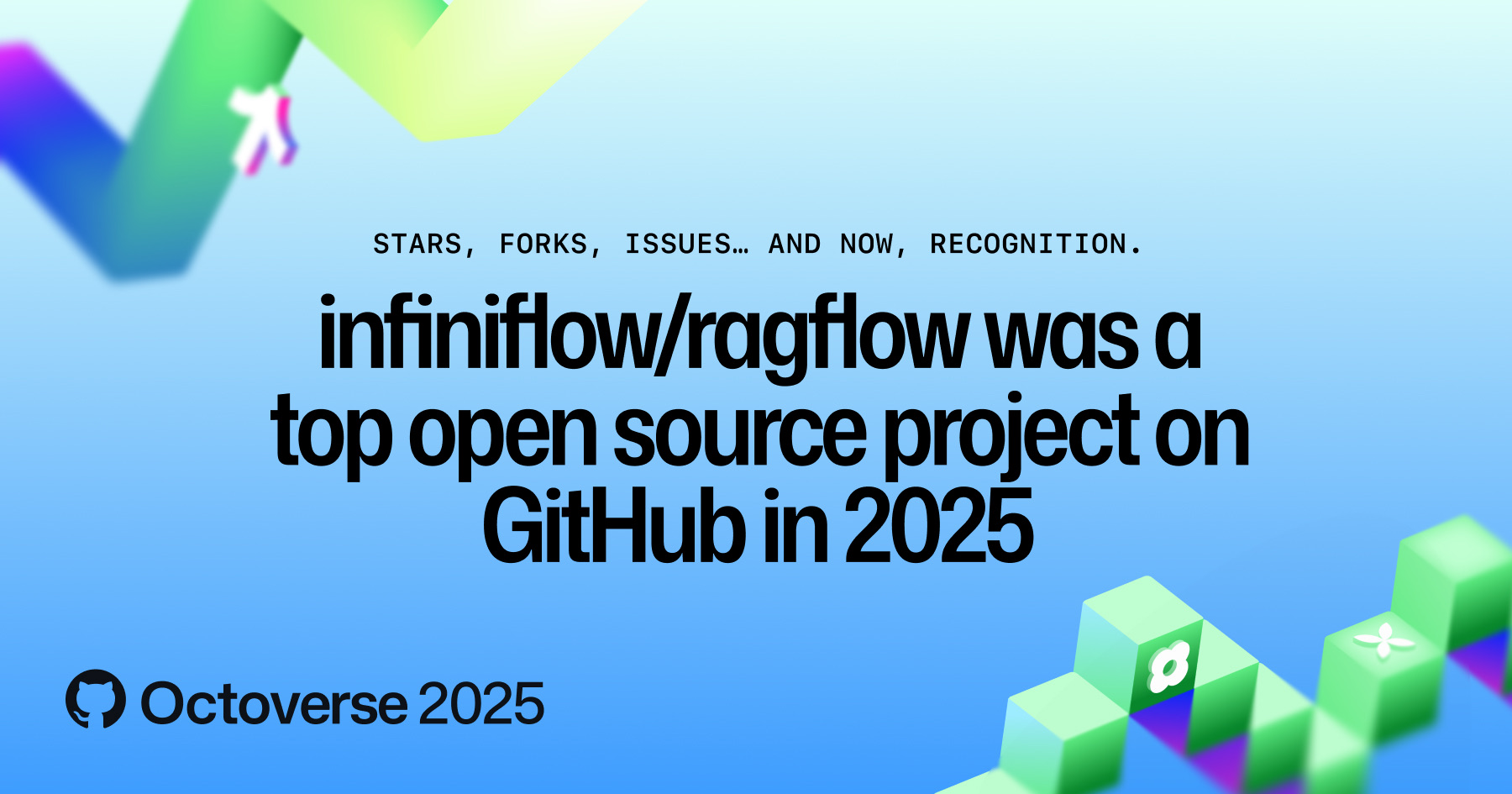
RAGFlow combines open-source RAG, document ingestion, and agent workflows. For teams, it is most useful when source work needs to stay traceable.
What this is about
RAGFlow is not another chatbot, but a concrete tool for teams that want to bring AI into real workflows. Its value is not one model answer, but a cleaner way to connect documents, models, permissions, or operations.
For this tool check, one question matters: can a real user test, install, or run it today? For RAGFlow, the answer is yes. The official website describes RAGFlow as an open-source RAG engine with a built-in agent platform for enterprises.
What RAGFlow actually does
RAGFlow ingests documents, processes them through an ingestion pipeline, and combines classical search, vector search, BM25, re-ranking, and agent workflows. According to the project page, it supports cloud use, self-hosting, Docker images, and templates for areas such as investment research, legal precedent analysis, and maintenance support.
The important point is that the tool does not replace expert review. It structures the work so teams can reach a verifiable result faster and write less glue code themselves.
Why it matters
Many AI projects do not fail because of the model. They fail in daily operations: data is scattered, models change, teams need permissions, logs, and an interface that people can actually use. RAG systems in particular need more than a vector index. They need traceable sources, robust document processing, and tests against real questions. That makes RAGFlow interesting for teams that do not want to build every piece of retrieval infrastructure themselves.
For users, this matters because a good test does not end with a nice demo. The question is whether the tool also works with real documents, real roles, and real failure cases.
In plain language
Imagine a workshop where manuals, parts lists, and notes sit on different shelves. RAGFlow is not the mechanic. It is more like the well-organized storage room with a search system, source labels, and a workbench, so the mechanic can see faster which instruction actually fits.
A practical example
A mid-sized team gives itself two weeks for a pilot. It starts with 10,000 pages of internal documentation, three user roles, and five recurring questions from support or engineering. The goal is not to automate everything immediately, but to measure 50 typical requests: how often does the system find the right source, how often does it hallucinate, and how much human follow-up remains?
After the test, the team decides using three numbers: source-backed accuracy, time saved per request, and the number of cases where a human had to step in. That is how an AI tool should be judged: small, measurable, and reversible.
Scope and limits
- First, data quality still matters. Poor documents, outdated permissions, or conflicting sources are not automatically made true by RAGFlow.
- Second, every production use needs clear security rules: who may see which data, which models are used, and where logs end up?
- Third, a pilot is not production proof. Load, cost, updates, and failure handling must be checked separately.
For highly sensitive documents, teams should check self-hosting, access rights, and model providers before rollout. For small experiments, the feature set may be larger than necessary.
SEO & GEO keywords
RAGFlow, Infiniflow, Retrieval-Augmented Generation, RAG engine, AI agents, document AI, hybrid search, BM25, vector search, self-hosted AI, MCP
💡 In plain English
RAGFlow helps teams prepare internal documents so AI systems can answer with sources. The best test is a small pilot with real questions and clear measurement of accuracy, source quality, and follow-up work.
Key Takeaways
- →RAGFlow is an open-source RAG tool with agent workflows.
- →Its value lies in document ingestion, hybrid search, and traceable sources.
- →Self-hosting is possible, but must be configured securely.
- →Teams should test with real support or knowledge questions, not demo prompts.
FAQ
Is RAGFlow a chatbot?
No. It is mainly a RAG and agent platform on which chat or knowledge applications can be built.
Can RAGFlow be self-hosted?
Yes, the project points to self-hosting and Docker images. Security and permission concepts remain the operator's responsibility.
Who should test it?
Teams with many documents, recurring knowledge questions, and a need to make sources traceable.