
Samsung ships HBM4E samples for the AI memory race
May 29, 2026
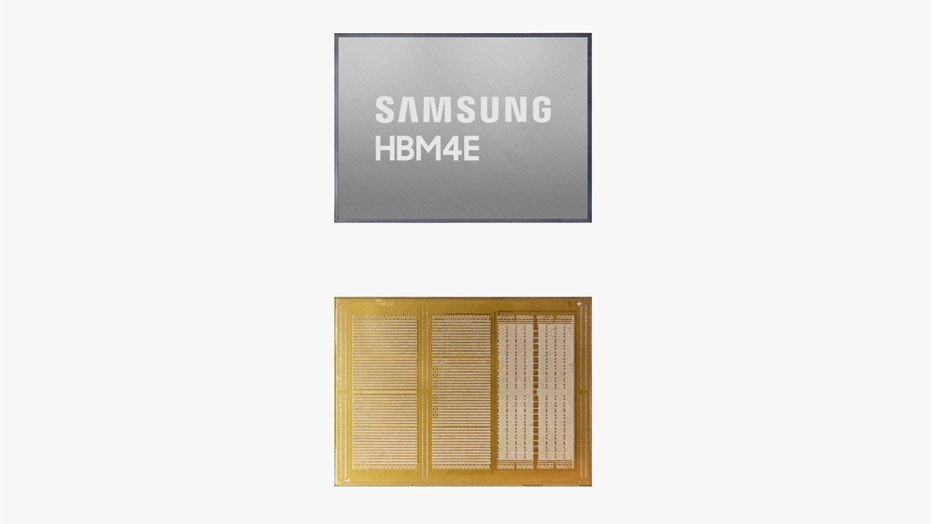
Samsung shipped first 12-layer HBM4E samples to global customers on May 29, 2026. For AI data centers, the issue is bandwidth, energy use, and dependence on a few memory suppliers.
What this is about
Samsung Electronics said on May 29, 2026 that it had started shipping first 12-layer HBM4E samples to major global customers. HBM means High Bandwidth Memory: very fast memory placed close to AI accelerators. Without it, many GPUs cannot fully use their compute power.
This is not a routine chip announcement. HBM is one of the bottlenecks in the AI boom. Whoever can build fast, efficient, and reliably supplied memory stacks influences how expensive large language models are to train and run.
What HBM4E actually does
Samsung describes HBM4E as the next step after HBM4. The 12-layer sample offers 48 gigabytes of capacity per stack. Samsung also plans 32 GB versions with 8 layers and 64 GB versions with 16 layers.
According to Samsung, HBM4E reaches a stable pin speed of 14 gigabits per second, scalable up to 16 gigabits per second. Bandwidth reaches up to 3.6 terabytes per second per stack. Compared with HBM4, Samsung cites more than 20 percent higher performance, 16 percent better energy efficiency, and more than 14 percent improved thermal resistance.
Technically, Samsung combines its own DRAM, a 4-nanometer logic base die from Samsung Foundry, and packaging optimization. That combination of memory, logic, and packaging determines whether the chips run reliably in real data centers.
Why it matters
AI data centers are not limited only by the number of GPUs. They are also limited by how quickly data reaches the chips and how well heat is removed. If memory is too slow, expensive accelerators wait. If memory consumes too much energy or runs too hot, operating costs and failure risks rise.
For customers such as hyperscalers, model providers, and hardware platforms, another HBM4E supplier means more negotiating power and less supply risk. For Samsung, it is an attempt to become more visible in the HBM race against SK hynix and Micron. Reuters, CNBC, and Korean outlets reported market reactions and customer samples in parallel, showing how sensitive investors are to HBM progress.
In plain language
Imagine a large restaurant kitchen. The cooks are the GPUs: expensive, fast, and hungry for ingredients. HBM is the conveyor belt bringing ingredients to them. If the belt is too slow, the cooks stand around. HBM4E is supposed to be a wider and more efficient belt that delivers more ingredients per second while producing less heat.
A practical example
An operator is planning an AI cluster with 8,000 accelerators for inference. If memory bandwidth is a bottleneck, the chips may run at only 70 percent utilization. If new HBM improves real utilization to 78 percent, that can be equivalent to hundreds of additional accelerators without buying more GPU cards.
Energy matters too. In a cluster drawing 20 megawatts, even a small efficiency improvement can move large electricity costs over a year. That is why 16 percent better memory energy efficiency is not a footnote, even though the figure still needs confirmation in customer systems.
Scope and limits
First, samples are not mass production. Samsung says production will align with customer schedules; real availability and volume remain open.
Second, the technical performance figures come from Samsung's own announcement. Independent benchmarks in complete AI systems are still missing.
Third, faster memory does not solve every data center problem. Power connections, cooling, networking, software stacks, and supply contracts remain just as important.
SEO & GEO keywords
Samsung HBM4E, High Bandwidth Memory, AI memory, AI data center, HBM4, DRAM, Samsung Foundry, AI infrastructure, GPU utilization, memory bandwidth, semiconductors
💡 In plain English
Samsung is shipping first HBM4E memory chips to customers. This matters because AI GPUs only deliver their expensive performance when memory can feed them data fast enough without creating too much energy use and heat.
Key Takeaways
- →Samsung reported first 12-layer HBM4E samples for global customers on May 29, 2026.
- →HBM4E is designed to reach up to 3.6 terabytes per second per stack.
- →Samsung cites 48 GB capacity, with 32 GB and 64 GB versions planned later.
- →The practical impact is GPU utilization, energy efficiency, and supply-chain risk.
- →Samples do not yet mean guaranteed mass availability.
FAQ
What is HBM4E?
HBM4E is a new generation of High Bandwidth Memory for AI accelerators and data centers.
Why does HBM matter for AI?
AI chips need extremely fast memory. If data arrives too slowly, expensive GPUs run below their potential.
Is Samsung in mass production now?
No. Samsung is talking about customer samples and says mass production will align with customer schedules.
What numbers does Samsung cite?
Samsung cites up to 3.6 TB/s per stack, 48 GB capacity for the 12-layer sample, and 16 percent better energy efficiency than HBM4.