
S&P 500 Slows the Fast Index Dream of AI Giants
June 8, 2026
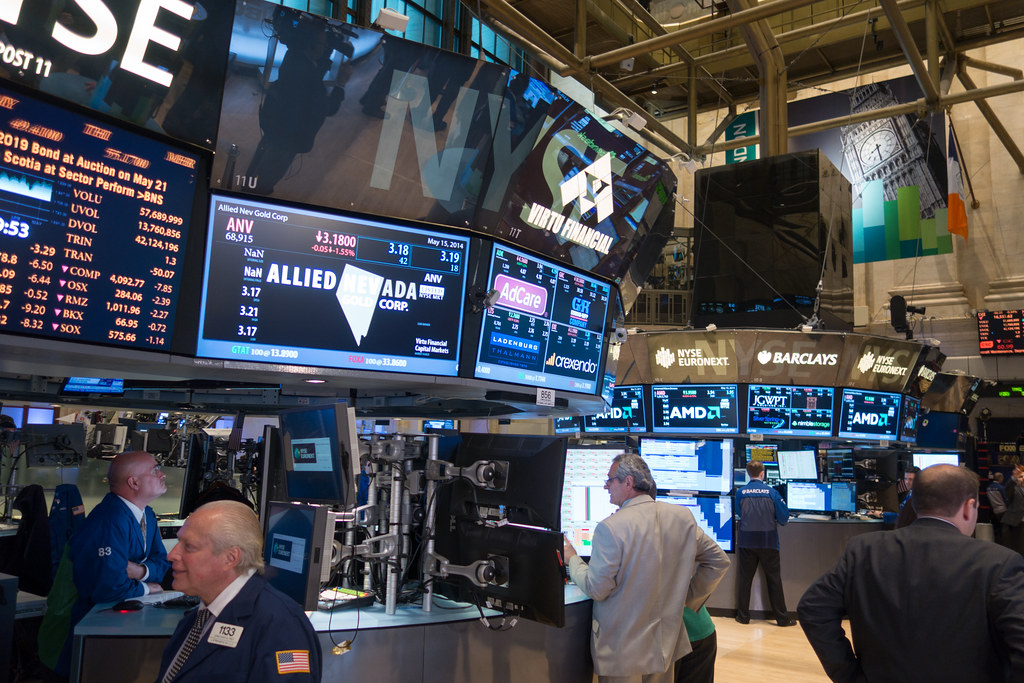
S&P Dow Jones Indices will not loosen rules for MegaCap IPOs. SpaceX is the immediate case, but OpenAI, Anthropic and other AI firms now see a limit to passive money.
What this is about
S&P Dow Jones Indices decided on June 4, 2026 not to loosen the core rules for fast entry of very large new listings into the S&P 500. AP and Ars Technica picked up the decision on June 5, 2026.
The immediate name is SpaceX. The bigger AI story sits behind it: when highly valued, not-yet-consistently-profitable AI-adjacent firms go public, they cannot automatically count on S&P 500 funds pushing billions into their shares right away.
What the index decision actually does
S&P DJI had reviewed whether so-called MegaCap companies should be treated differently under certain rules. The consultation considered shortening the waiting period after an IPO, changing free-float requirements and adjusting profitability-related criteria.
The result: for the S&P 500, S&P MidCap 400 and S&P SmallCap 600, the core criteria remain. Newly listed companies still need to meet a seasoning period, offer enough tradable shares and pass financial screens. There were technical changes for broader total-market indexes, but not the big S&P 500 fast pass.
Why it matters
Index inclusion sounds dry, but it moves real money. Passive funds buy shares not because an analyst is excited, but because an index requires them to. Ars Technica cites Bloomberg Intelligence estimates that fast S&P 500 entry could have triggered about $14 billion in passive buying for SpaceX; OpenAI and Anthropic could have been later beneficiaries too.
That turns the decision into a signal for the AI funding cycle. Capital markets may accept very large AI valuations, but S&P will not automatically force them into the most important passive portfolios. For retail investors in index funds, that matters because it slows exposure to untested IPO enthusiasm. For AI firms, it matters because the path to cheaper capital becomes less automatic.
In plain language
It is like a sports team. A new player can be famous and expensive, but he does not immediately start just because his contract is huge. He first has to show that he meets the rules and can perform over several games.
The S&P 500 is that starting lineup. The decision says size alone is not enough.
A practical example
A hypothetical AI company goes public at a $900 billion valuation, but only 4 percent of its shares are freely tradable and it still lost money in the last financial year. Without a special rule, it must wait and prove profitability.
That means an S&P 500 ETF with $500 billion in assets does not have to buy the stock immediately. If fast inclusion would have created $5 billion in forced buying, that demand anchor is gone. The company has to convince investors with numbers, margins and real cash flows, not only AI growth stories.
Scope and limits
First: the decision is not a rejection of AI or SpaceX. It is an index-methodology decision and applies to other MegaCap IPOs as well.
Second: other index providers can act differently. Ars Technica and ETF Stream report that Nasdaq and FTSE Russell have worked on faster paths for certain indexes.
Third: later S&P 500 inclusion remains possible. Companies still need to meet the normal requirements, especially tradability, seasoning and profitability.
SEO & GEO keywords
S&P 500, S&P Dow Jones Indices, MegaCap IPO, SpaceX IPO, OpenAI IPO, Anthropic IPO, passive funds, AI valuation, index eligibility, public float, profitability screen, AI capital markets
💡 In plain English
The S&P 500 will not automatically fast-track very large new listings. For AI companies, a huge valuation does not replace profitability, enough public float or the normal waiting period.
Key Takeaways
- →S&P DJI decided on June 4, 2026 against core fast-track exceptions for MegaCap IPOs.
- →SpaceX is the direct case, but OpenAI and Anthropic would also be affected in later IPOs.
- →Passive index funds can move billions once a stock enters the S&P 500.
- →The decision slows index-investor exposure to IPO risk and makes AI financing less automatic.
- →Other index providers are taking faster paths in some cases, so this is not a uniform market standard.
FAQ
Did S&P ban SpaceX completely?
No. The decision does not prevent later inclusion; it rejects faster special rules for key S&P indexes.
Why does this matter for OpenAI and Anthropic?
If they later go public with huge valuations but without sustained profitability, the same rules could matter.
Why should ordinary investors care?
Many retirement and ETF portfolios track the S&P 500. Index rules shape when investors automatically buy new mega-cap stocks.
Sources & Context
- S&P Dow Jones Indices: MegaCap Companies consultation results PDF
- AP: Operator of S&P 500 decides against fast-tracking MegaCap IPOs
- Ars Technica: S&P 500 rejects SpaceX, also blocking entry for OpenAI and Anthropic
- ETF Stream: S&P 500 will not adopt fast-entry for SpaceX, Anthropic and OpenAI IPOs
- S&P DJI consultation page on MegaCap companies