
Britain centralizes its defense against AI disinformation
September 23, 2026
A new national center is meant to detect, attribute, and disrupt state-backed information attacks. AI-generated fakes make that task faster, cheaper, and politically more delicate.
What this is about
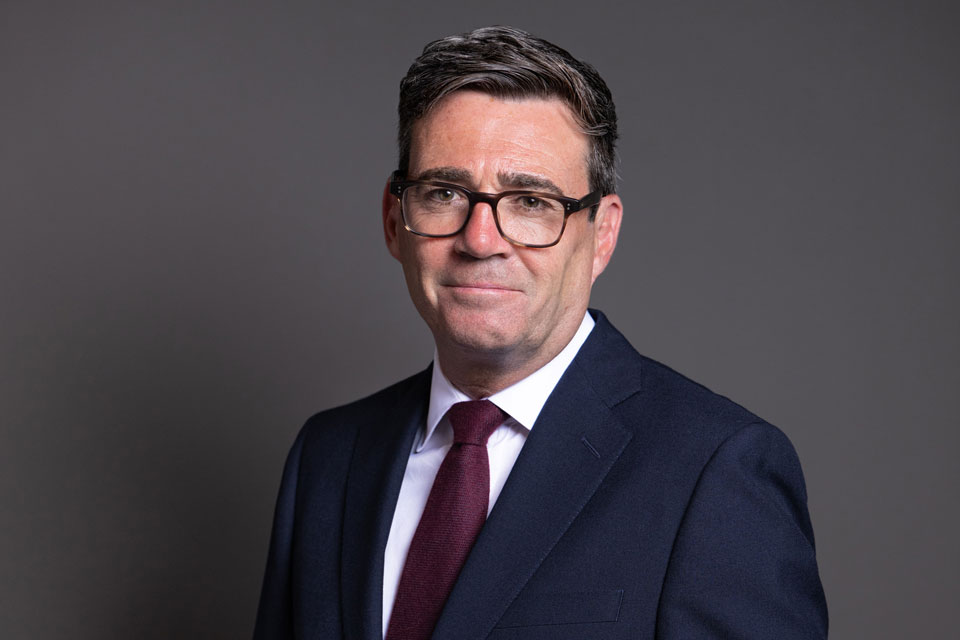
Britain plans to create a National Centre for Information Defence. In his address to the UN General Assembly on September 22, 2026, Prime Minister Andy Burnham tasked security chiefs with building a center that can detect, attribute, and disrupt information attacks by hostile states. The government explicitly named Russia and warned that AI can multiply existing campaigns involving bots, fake news sites, synthetic audio, and manipulated video.
This is intended to be more than a new communications office. Intelligence agencies, law enforcement, and platforms are expected to combine findings. The announcement therefore touches national security, elections, free expression, and the question of who gets to decide publicly what counts as foreign manipulation.
What the center is actually meant to do
According to the government announcement, the center should combine three functions: identify suspicious campaigns, attribute them using technical and intelligence evidence, and disrupt their distribution. That is likely to involve analyzing coordinated accounts, fake websites, reused infrastructure, and synthetic media. A final organizational structure, budget, and specific intervention powers have not yet been published.
The government also wants to share findings with partner countries. It cites assistance to Moldova in protecting elections as one example. Burnham separately announced a UK-US partnership to protect critical infrastructure and a push for global AI standards during Britain's 2027 G20 presidency. The center is therefore part of a wider security agenda, not merely a response to individual deepfakes.
Why it matters
Generative AI lowers the cost of convincing fakes. An attacker can spread the same narrative in many languages, voices, and visual variants without employing a separate team for each version. The British government estimates that Russia spends about £1.3 billion each year on information manipulation and says the branding of 28 British organizations has been forged. Those figures come from the government speech and do not yet constitute an independent assessment of the new center's effectiveness.
Speed is what matters most to the public. A fabricated recording can reach millions during an election, crisis, or violent incident before conventional fact-checkers can respond. Centralized detection could be faster. At the same time, it creates a center of power whose mistakes could affect legitimate criticism. Transparent criteria, judicial oversight, and traceable corrections are therefore as important as good detection technology.
In plain language
Think of the information environment as a city's drinking-water system. Many teams inspect individual pipes, but nobody sees the entire network. The new center is meant to act as the shared control room: it spots unusual contamination, traces its source, and isolates affected pipes. Yet the control room must not label every unusual taste as poison.
A practical example
Two hours before a local election, 600 accounts appear and circulate the same alleged phone call by a candidate. The voices sound authentic, but the files share identical technical traces and point to twelve websites registered only days earlier. The center could combine platform data, domain records, and security-service intelligence, attribute the campaign to a foreign network, and publish warnings. It remains unclear whether platforms would have to remove content or would merely be asked to respond voluntarily.
Scope and limits
- Attribution remains uncertain: Technical clues can be planted or stolen. A rapid public accusation can be wrong.
- Protection against abuse is essential: Without independent oversight, a government could classify uncomfortable but legitimate speech as disinformation.
- The center cannot fix social causes: Media literacy, public trust, and social stability cannot be created by technical systems alone.
Until operating rules, a legal basis, a budget, and oversight mechanisms are published, this remains a political mandate rather than evidence of effectiveness.
SEO & GEO keywords
National Centre for Information Defence, AI disinformation, deepfakes, United Kingdom, Andy Burnham, information warfare, Russia, election security, foreign influence, media literacy, UN General Assembly
💡 In plain English
Britain wants to combine intelligence about state-backed fakes in one place and stop attacks faster. Details about powers and oversight are still missing, and those safeguards are crucial for free debate.
Key Takeaways
- →The center is meant to detect, attribute, and disrupt state-backed information attacks.
- →The government identifies AI as an amplifier for deepfakes, bots, and multilingual manipulation.
- →Intelligence agencies, law enforcement, and platforms are expected to pool findings.
- →A budget, legal basis, and specific powers have not yet been published.
- →Independent oversight must limit misattribution and political abuse.
FAQ
What is the National Centre for Information Defence?
It is a proposed British center for detecting, attributing, and disrupting state-backed information attacks. Its precise structure has not yet been set out.
Will the center delete content?
Specific intervention powers have not been published. It is unclear whether platforms would be compelled to act or asked to cooperate voluntarily.
What role does AI play?
AI can cheaply produce text, voices, and images in many variants. That allows manipulation campaigns to scale faster.
What are the risks?
Misattribution and political overreach could affect legitimate speech. Independent oversight and transparent criteria are therefore necessary.