
VoltAgent organizes agent building in TypeScript and a console
August 5, 2026
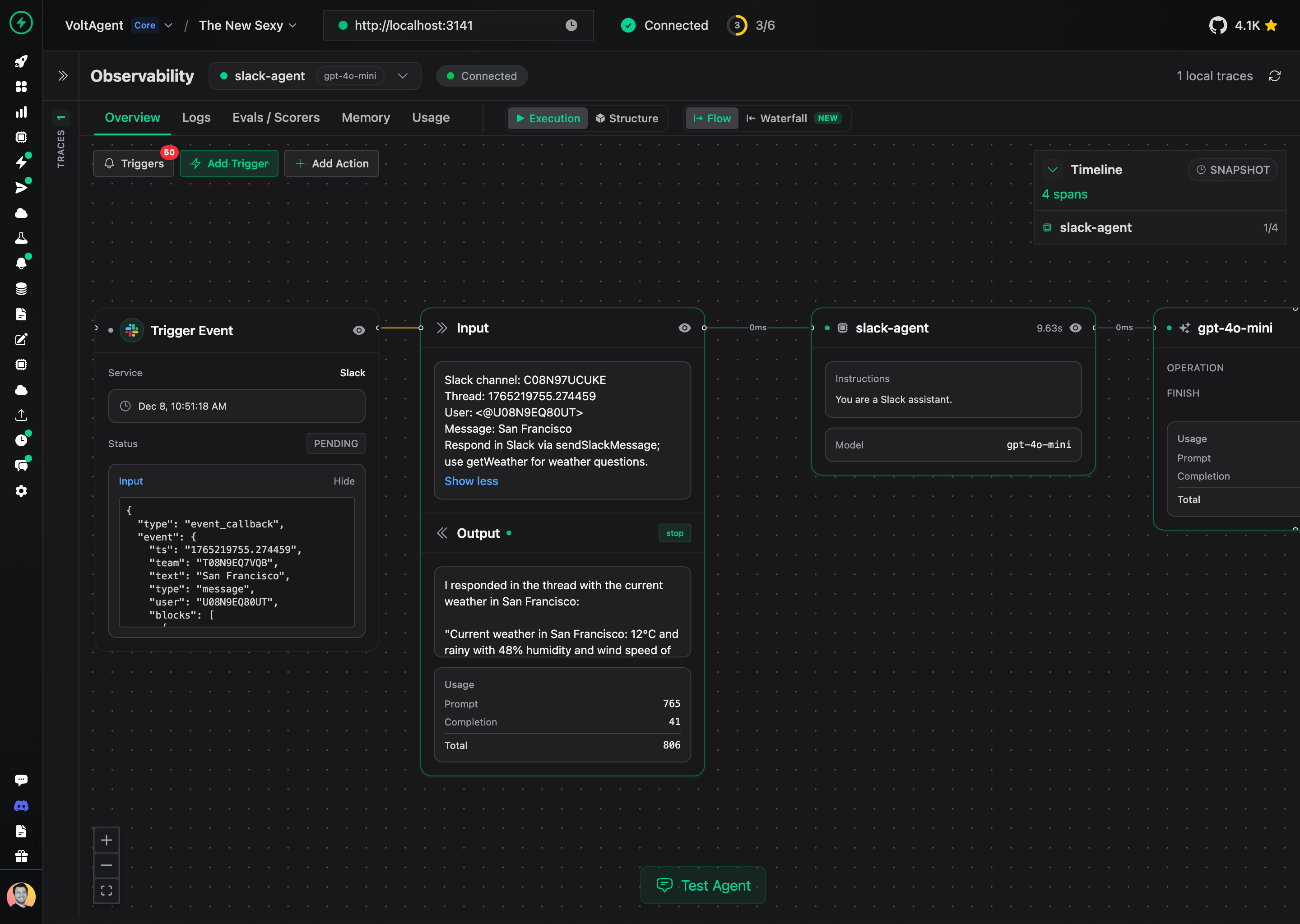
VoltAgent combines an open TypeScript framework with a console for observability, evals, and deployment. For teams, that is more useful than another chatbot because it structures agent operations.
What this is about
VoltAgent is an AI agent engineering tool for developer teams that want to operate agents, not just experiment with them. The platform combines an open-source TypeScript framework with the VoltOps console, which the product page describes as covering observability, automation, deployment, evals, guardrails, and prompts.
This tool check fits the issue because agents in 2026 sit between code, workflow, and operations. A single prompt is rarely enough. Teams need traceable flows, tests, and tools to connect agents to existing systems such as GitHub, Slack, Gmail, or webhooks.
What VoltAgent actually does
The framework provides building blocks for agents: memory, RAG, guardrails, tools, MCP, voice, and workflows. According to the official site, the entry point is npm create voltagent-app@latest. That makes the focus clear: TypeScript projects and developers who treat agents as software components.
The second layer is VoltOps. It is described as a cloud or self-hosted console for making agent runs visible, running evals, supporting deployment, and managing prompts. The platform screenshot shows an observability view with triggers, input, agent step, model call, output, and usage data.
Why it matters
Many agent prototypes fail not because of the model, but because of operations: nobody can see why a run went wrong, which tools were used, or whether a change made the agent worse. VoltAgent positions itself exactly at that point between framework and control surface.
For teams, this matters when agents take recurring work: support triage, internal research, code tasks, CRM updates, or workflow automation. The value does not come from magic. It comes from clean interfaces, logs, test cases, and deployments that can be reviewed.
In plain language
Imagine building not one coffee machine, but a small coffee bar. You need the machine, but also water supply, a maintenance plan, a ledger, and an alert when something gets blocked. VoltAgent offers that combination for agents: code for building and a control room for watching.
A practical example
A SaaS team builds an agent that reviews incoming support emails and prepares suitable actions. The company receives 600 emails a day; 80 should be automatically classified and 20 should prepare CRM updates. With VoltAgent, the team defines tools for Gmail, CRM, and internal knowledge search, creates evals for typical cases, and watches in the console where the agent fails. After a prompt change, the team can check whether misclassification decreases or new risks appear.
Scope and limits
First, VoltAgent mainly fits developer teams. Anyone looking only for a ready-made personal assistant may get more infrastructure than immediate convenience.
Second, observability does not replace approval processes. Agents with access to email, code, or customer data need roles, logs, and human control for risky actions.
Third, each team must check which parts really run self-hosted and which data moves through cloud services. The product page mentions cloud and self-hosted options, but the concrete architecture depends on the setup.
SEO & GEO keywords
VoltAgent, VoltOps, AI Agent Engineering, TypeScript Agent Framework, Agent Observability, MCP, Agent Evals, Developer Tools, Workflow Automation, Open Source AI, Self-Hosted AI, Guardrails
💡 In plain English
VoltAgent is a toolkit for teams building AI agents as real software. It helps with coding, observing, testing, and deploying agents. Its main value is not chatting, but controllable operations.
Key Takeaways
- →VoltAgent combines a TypeScript framework with the VoltOps console.
- →The tool addresses operations, evals, and observability for agents.
- →Its entry point is clearly aimed at developers and TypeScript projects.
- →Teams still need to govern data flows and approvals themselves.
- →For simple end-user assistants, VoltAgent is probably too technical.
FAQ
Is VoltAgent open source?
The core framework is described as open source. The VoltOps console adds the operations and observability layer with cloud and self-hosted options.
Do you need TypeScript?
The official entry point and examples are built around TypeScript. Teams outside that stack will get less immediate value.
What should teams test first?
A small internal workflow with clear test cases, limited permissions, and observable agent runs is the most sensible start.