
WEF shows the AI boom moving into power grids
June 23, 2026
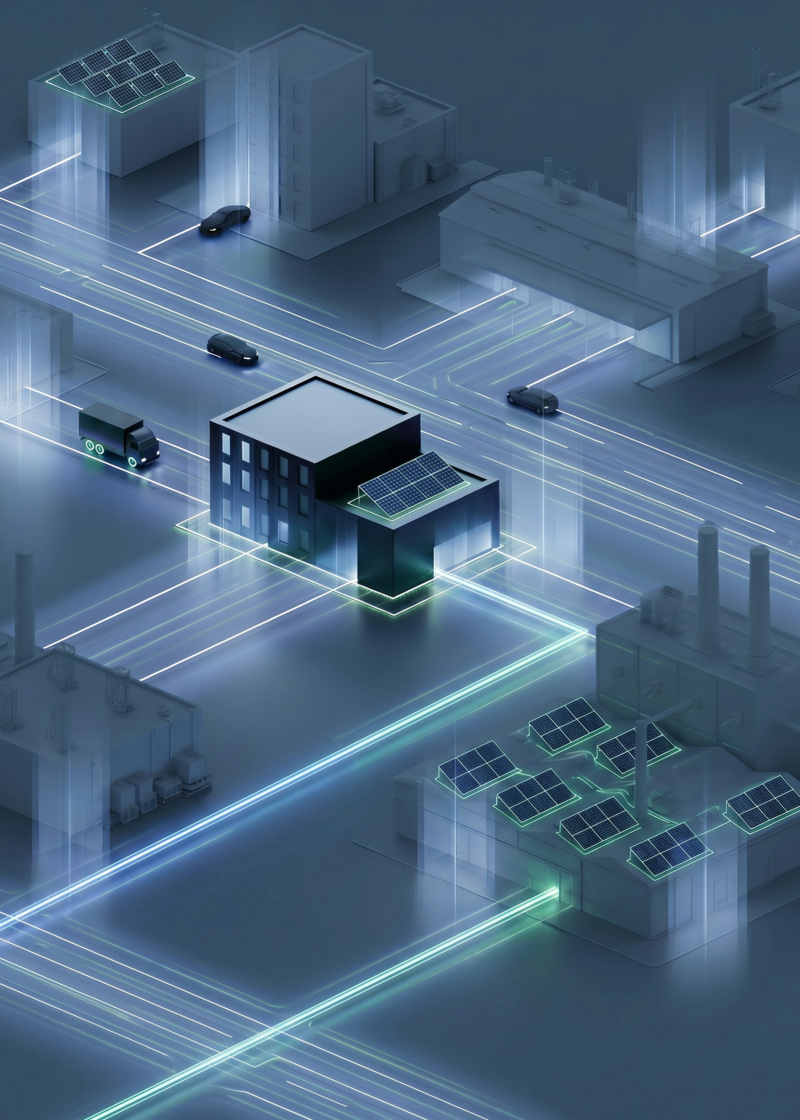
The 2026 Top 10 technologies report moves attention beyond model hype. Energy, materials, cooling, medicine, and robotics are becoming decisive.
What this is about
The World Economic Forum and Frontiers published their Top 10 Emerging Technologies 2026 report on June 23, 2026. The interesting message is not the ranking itself, but the direction: after years of software and AI headlines, technologies are moving forward that directly affect power grids, cooling, lithium, food, medicine, and robotics.
For real people, that matters more than the next chatbot feature. These technologies help decide whether electricity stays affordable, buildings use less energy, battery supply chains become more stable, and medicines can be matched more precisely to individual patients.
What the report actually does
The report collects ten technologies that WEF and Frontiers see near a tipping point between research and real-world deployment. Examples include everything-to-grid energy, direct lithium extraction, passive radiative cooling, engineered living therapeutics, and contextual robotics.
The selection is not based only on novelty. WEF says development progress and potential societal impact also matter. Frontiers describes the trend as a move away from software-first AI towards physical systems that operate in factories, clinics, power grids, mines, and food production.
Why it matters
The AI boom depends on infrastructure. Data centres need power, chips need materials, companies need cooling, and health systems need ways to make therapies more precise. The WEF article gives one concrete example: in California, more than 16,000 solar-equipped homes in a distributed network pushed 51 megawatts back to the grid during an evening demand peak in 2024.
That is the important reality check. AI remains part of the story, but the next phase will not be decided only in model training. It will be decided in grids, factories, buildings, and supply chains.
In plain language
Imagine spending years improving a cookbook. The recipes keep getting better. Then the kitchen notices: without a stove, ingredients, a fridge, water, and electricity, every recipe remains theory.
The report is saying, in effect: the next interesting technologies are not just better recipes. They are about the kitchen itself.
A practical example
A realistic example: a city has 80,000 electric vehicles, 40,000 home batteries, and several data centres. On a hot August day, electricity demand rises by 120 megawatts after 5 p.m. If only five percent of the batteries coordinate and feed back 2 kilowatts each, that creates a theoretical 12 megawatts of buffer. It does not replace a power plant, but it can smooth the most expensive demand peak.
At the same time, passive radiative cooling on schools and warehouses could reduce air-conditioning load. Both are less spectacular than a new model, but more visible in everyday life.
Scope and limits
First: a WEF list does not guarantee that every technology scales quickly. Regulation, cost, supply chains, and acceptance all matter.
Second: some solutions can create new dependencies. Direct lithium extraction needs plants, water checks, and environmental review; robotics needs safety rules and labour-market policy.
Third: the report does not replace local feasibility studies. What works in California with many solar roofs does not automatically fit every European grid area.
SEO & GEO keywords
World Economic Forum, Frontiers, Top 10 Emerging Technologies 2026, everything-to-grid, direct lithium extraction, passive radiative cooling, engineered living therapeutics, contextual robotics, AI infrastructure, energy grid, Summer Davos, Dalian
💡 In plain English
The report says the next phase of AI depends on physical systems. Power, cooling, materials, factories, and clinics matter more than another chatbot feature.
Key Takeaways
- →WEF and Frontiers published the report on June 23, 2026.
- →The list emphasises physical infrastructure rather than pure software hype.
- →Everything-to-grid, lithium extraction, and passive cooling are central examples.
- →The AI boom is increasingly shaped by energy and supply-chain questions.
- →Local deployment still depends on cost, regulation, and grid conditions.
FAQ
Is this only an AI report?
No. AI is part of the context, but the list covers energy, materials, medicine, robotics, and cooling.
Why does everything-to-grid matter?
It can use distributed storage such as electric cars and batteries to soften electricity peaks.
Are these technologies ready everywhere?
No. Many are near scale-up, but still need local checks, regulation, and investment.