
US renames AI ‘Super Intelligence’ — with policy consequences
September 30, 2026
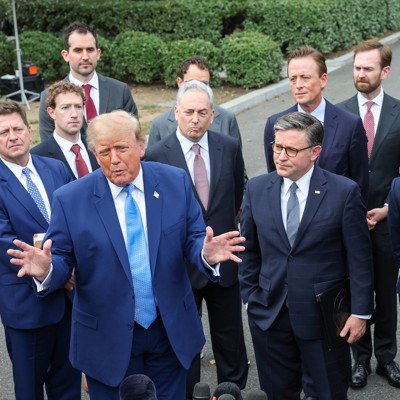
An executive order tells US agencies to call AI “Super Intelligence.” At the same time, leading labs promise four layers of voluntary safety controls.
What this is about
US President Donald Trump signed an executive order on September 29, 2026, directing federal agencies to use the term “Super Intelligence” instead of “Artificial Intelligence” in non-statutory documents. The change applies to official correspondence, websites, reports, policies, and other executive-branch publications. Within 60 days, the president’s science and technology adviser must also propose a statutory definition.
On the same day, leaders from Google, Anthropic, Meta, OpenAI, xAI, and Nvidia signed a safety accord with the government for powerful AI models. The pairing is unusual: the government is changing the political language first, while the most important providers promise voluntary controls.
What the order and accord actually do
The order does not amend existing laws, contracts, or historical documents. Until Congress acts otherwise, the order says “Super Intelligence” covers the same systems that US law already defines as artificial intelligence. In practical terms, it initially creates a mandatory language rule for the executive branch.
The legislative proposal due after 60 days must assess whether the new definition should modify, expand, or replace the existing AI definition. According to Nextgov, the parallel industry accord names four layers of control: internal monitoring of capabilities and alignment, an internal oversight team, independent external auditors, and an independent committee overseeing those reports.
Why it matters
Words shape policy. If agencies start calling a broad range of current systems “Super Intelligence,” expectations and public debate may shift even though the technology did not become more capable overnight. A later statutory definition could also determine which providers, models, and applications face special obligations.
The accord matters because its signatories control a large share of leading models and compute infrastructure. Yet it relies on self-governance and external audits rather than a new regulator. Vice President JD Vance rejected an AI regulator modeled on aviation or drug authorities, according to Nextgov, and pointed to existing powers held by the FTC and Department of Justice.
In plain language
Imagine a city deciding to call every bicycle a “high-speed vehicle.” The bicycles do not become faster, but forms, signs, and political arguments suddenly sound more urgent. At the same time, manufacturers promise to inspect their own brakes and let outside inspectors in. The key questions remain who writes the test and what happens when a product fails.
A practical example
A US agency publishes guidance in November 2026 for a system that sorts applications. Under the order, the document calls it “Super Intelligence,” even though it only classifies documents. A provider of a more capable model sets internal safety limits, asks an external auditor to run 100 attack scenarios, and reports the results to an independent committee. The order controls the language; the accord describes the review process. Neither automatically guarantees that a failing system will be withdrawn.
Scope and limits
- The order is initially a language and definition policy. It does not prove new technical capabilities or immediately create enforceable private rights.
- The industry accord is voluntary. Public details do not yet show how strict the test standards are, who selects auditors, or what sanctions follow a breach.
- The statutory definition does not exist yet. Only the promised proposal and any later act of Congress will show whether legal duties actually change.
SEO & GEO keywords
Super Intelligence, artificial intelligence, White House, executive order, Donald Trump, US AI regulation, AI Safety Accord, OpenAI, Anthropic, Google, Nvidia, Meta
💡 In plain English
The US government is ordering agencies to call AI “Super Intelligence.” This initially changes the language more than the law; concrete new duties depend on a later statutory definition and enforcement of voluntary safety promises.
Key Takeaways
- →US agencies must use “Super Intelligence” instead of “Artificial Intelligence” in non-statutory documents.
- →A proposal for a statutory definition is due within 60 days.
- →Leading AI companies promise four layers of internal and external safety controls.
- →The order does not amend existing laws, contracts, or historical documents.
- →The accord’s practical test standards and consequences remain unclear.
FAQ
Is “Super Intelligence” a new technical standard?
No. The order initially applies a new label to systems already covered by the statutory definition of AI.
Does the wording rule apply to private companies?
The order directs the US executive branch. It does not generally require private companies to use the same term.
Are the safety promises legally binding?
The published accord is voluntary. Public details describe controls but do not create a new statutory sanctions regime.
When could the law actually change?
A legislative proposal is due within 60 days. Congress would then be central to any statutory change.
Sources & Context
- The White House — Inaugurating the Era of Super Intelligence
- Nextgov — White House unveils ‘super intelligence’ executive order and industry accord
- Forbes — White House releases accord between AI executives
- Nextgov — The president’s new term for AI explained
- Nextgov — White House launches AI-powered America.gov