
Zerve turns data analysis into an agentic workspace
July 2, 2026
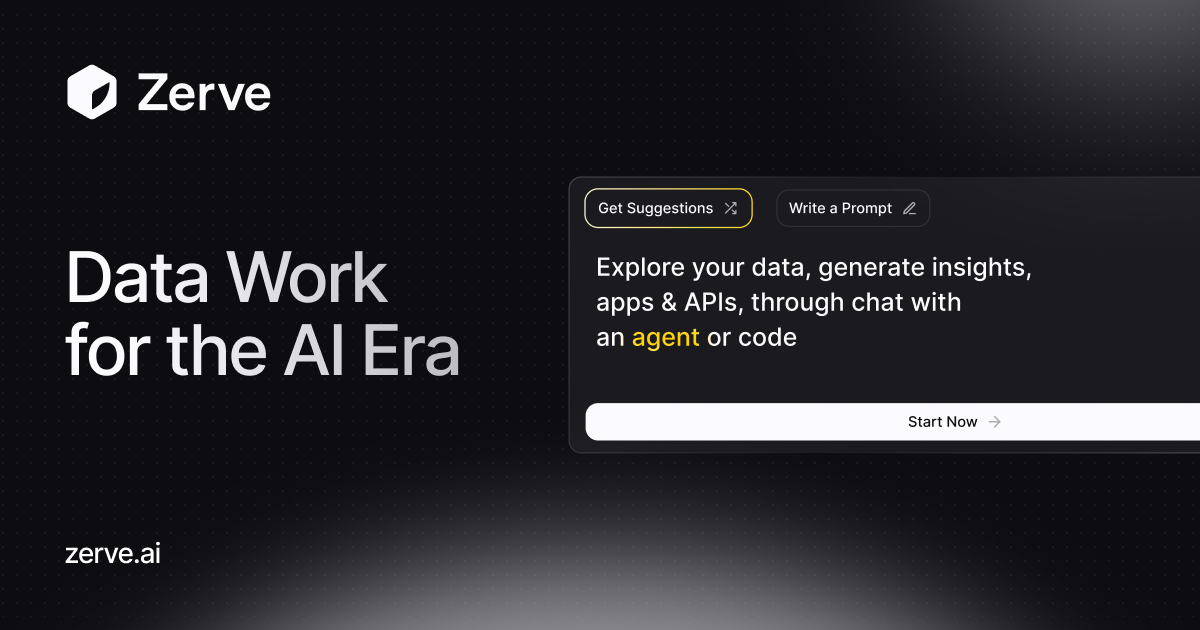
Zerve combines agentic notebooks, data discovery, reports, and deployments. For research and analytics teams, it is worth a look when chatbots and notebooks are not enough.
What this is about
Zerve is an agentic data platform for research and analytics teams. The practical point is that it does not just suggest code; it aims to run, fix, version, and share analysis work inside a persistent workspace.
For this AI tools edition, Zerve matters because many teams now move between chatbots, notebooks, warehouses, dashboards, and deployment tools. Zerve sits between those worlds: a tool for people who need to finish real data work without maintaining every step as a separate script.
What Zerve actually does
Zerve combines agentic notebooks, data discovery, reports, and deployments. According to its product page, the agent learns the project context, including data, code, and previous results, and keeps working inside that workspace. That is different from a loose chat window where code has to be copied, run locally, and documented later.
The platform is aimed mainly at data scientists, quant researchers, and analysts. Typical jobs include exploring data, building Python, SQL, or R workflows, keeping results reproducible, and sharing finished work as an interactive report, dashboard, API, or app. Zerve also names governance and reproducibility as core product promises.
Why it matters
Traditional notebooks are strong for exploration, but weaker when collaboration, longer-running work, deployment, and traceable decisions all meet. That is where companies often lose time: an analysis works locally, but three weeks later nobody is fully sure which data, parameters, and intermediate steps produced it.
Zerve is not a nameless landing page. The company announced a $7.6 million seed round in 2024, and independent coverage describes it as an Irish data science and AI development startup. In 2026, Zerve is also using hackathon and datathon formats, including an NCAA-related data analytics challenge context and an ODSC AI Datathon, to show real workflows.
In plain language
Imagine a kitchen where you do not only receive a recipe on paper. Zerve is closer to a prepared professional kitchen: the ingredients are ready, the stove is running, every step is logged, and the final dish can be served again later.
A chatbot, in that picture, is the cook who gives advice. Zerve wants to be the workspace, equipment, shopping list, process log, and serving station too.
A practical example
A mid-sized SaaS team wants to know why trial conversions dropped in June 2026. An analyst loads 180,000 product events, 12,000 CRM rows, and campaign data into a Zerve project. The agent proposes a segmentation, writes SQL queries, tests Python analyses, and builds a report.
After two hours, the team sees that users from one campaign start many projects but abandon after an average of 7 minutes because an import step fails. The analyst corrects the assumptions, reruns the workflow, and deploys a small API that checks this cohort daily.
Scope and limits
Three limits matter:
- Zerve does not remove the data scientist's responsibility. Bad questions, biased data, and unclear metrics are still human problems.
- Teams with strict privacy rules need to check which data may enter the platform, which region is used, and which governance features are contractually guaranteed.
- Agentic analysis can reach results faster, but it can also produce plausible mistakes faster. Any decision that affects budget, product, or customers needs review.
A sensible first test is a limited, non-sensitive project: take an old notebook, rebuild the data source, ask Zerve to reproduce the workflow, and compare result quality, runtime, and documentation.
SEO & GEO keywords
Zerve, agentic data platform, AI notebooks, data science workspace, analytics automation, reproducible analysis, Python analytics, SQL analytics, data discovery, conversational reports, AI research tools, data workflow deployment
💡 In plain English
Zerve is a data analysis workspace where an agent does not just suggest code, but keeps working inside the project context. It is especially interesting for teams that need to share analyses reproducibly and deploy them later.
Key Takeaways
- →Zerve is aimed at data scientists, quant researchers, and analysts.
- →The tool combines notebooks, data discovery, reports, and deployments.
- →Its value is mainly reproducible team work rather than loose chat-generated code.
- →Privacy, governance, and expert review remain mandatory before production use.
FAQ
Is Zerve a replacement for Jupyter?
Not automatically. Zerve addresses similar analysis work, but adds agents, team context, reports, and deployment.
Who is Zerve most useful for?
Teams that need recurring data analysis, Python/SQL workflows, and shared reports in a more controlled workspace.
Can it process sensitive data?
That depends on contract terms, region, governance, and internal rules. A privacy and security review should happen before use.