
Unstract turns documents into structured data for your workflows
November 10, 2026
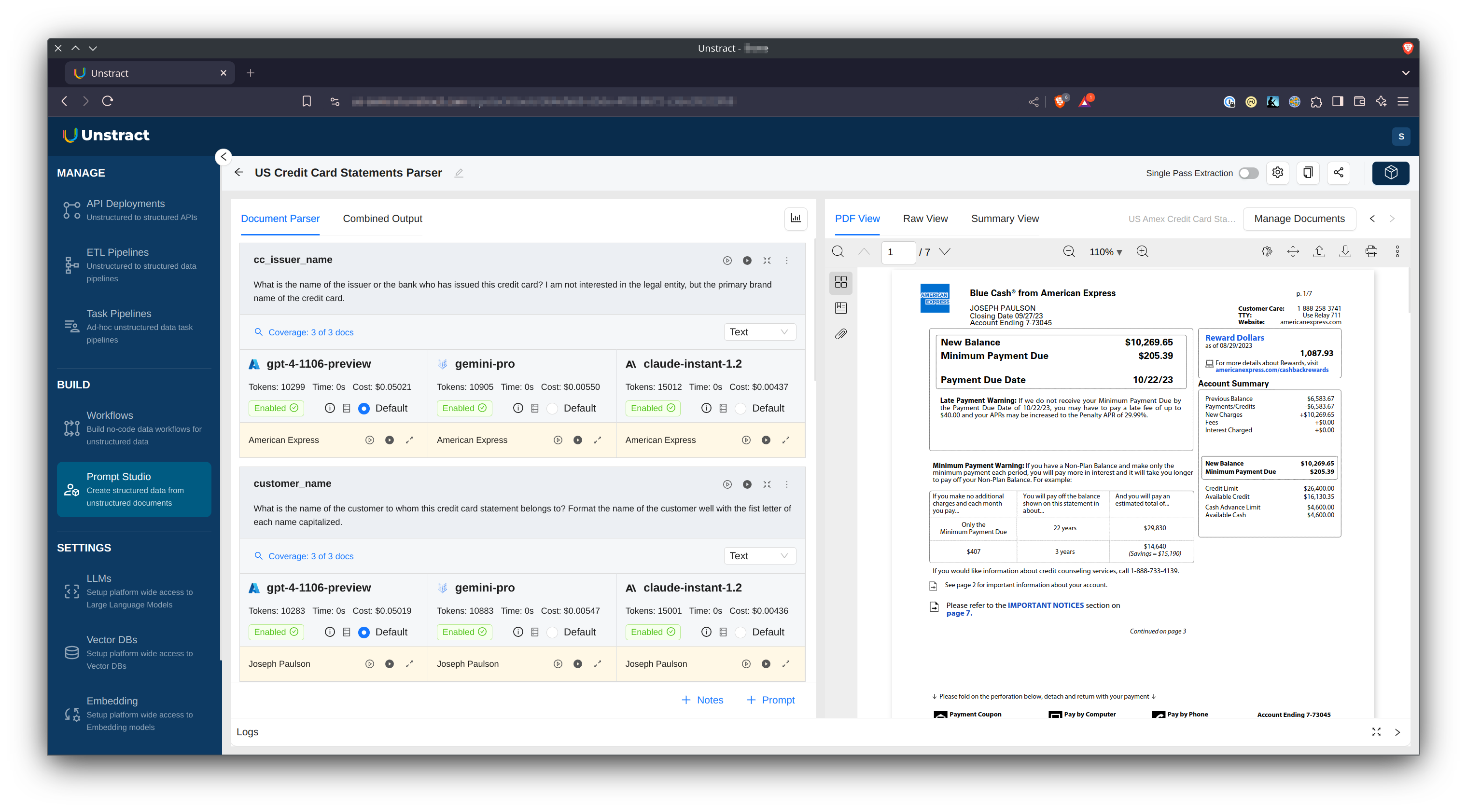
Unstract combines AI extraction with an interface for prompts, APIs and data pipelines. This tool check explains its uses, open-source edition limits and important privacy questions.
What this is about
Anyone processing invoices or statements from different sources knows the problem: the required information is similar, but it appears in a different place each time. Unstract, from Zipstack, aims to turn these documents into consistently structured data. Instead of asking a chatbot the same questions repeatedly, a team defines the fields it needs and builds a reusable workflow around them.
This tool check is based on product pages, the public repository and documentation retrieved on November 10, 2026. It is not reporting an alleged launch today, but examining an already usable tool. Unstract offers an open-source edition alongside commercial cloud and on-premise options. We did not conduct our own performance test with confidential documents for this article.
What Unstract actually does
In Prompt Studio, users describe in ordinary language which information they need from a document. For an invoice, that might mean supplier, invoice number, date and total amount. A text extractor prepares the content; a connected language model performs the structured interpretation. The output can be processed as JSON: a record with explicitly named fields.
The official quick-start guide demonstrates this process using credit card statements with different layouts. The project can become an API: another application sends a document and receives structured data. Alternatively, an ETL pipeline processes files from a source and loads the results into a database. Here, ETL means extracting, transforming and passing on data.
The repository also lists an MCP server for AI agents and an n8n node for existing automations. Its supported connections include Ollama for local models and various cloud providers. That offers a choice of components, not a guarantee that every combination produces the same results. The model, text extractor and storage must suit the intended use.
Why it matters
Unstract is particularly relevant to technical teams that want to integrate a recurring stream of documents into existing software. The practical difference from a one-off chat is the reusable schema and the interfaces: rather than only having a person read an answer, a downstream application can consume defined fields.
For occasional individual documents, setup may often be excessive. The open repository describes multiple services and specifies Linux or macOS, Docker, Docker Compose and at least 8 GB of RAM as prerequisites. Anyone running a local language model must also account for its resource requirements. A browser interface does not automatically make the system maintenance-free.
The project has also been introduced and linked on Hacker News. This independent community reference demonstrates public attention, but it is not a reliable accuracy evaluation. We therefore do not adopt the vendor's blanket performance promises. What matters is how well the system handles your own document types.
In plain language
Imagine a mailroom receiving differently designed forms every day. Instead of sorting them by appearance, an employee receives a blank recording sheet: name here, date there, amount in the final column. Unstract organizes a similar process using text extraction, a language model and predefined output fields.
The recording sheet creates order, but does not prove that every number was copied correctly. A neatly completed field can still contain the wrong amount. That is why spot checks and clear rules for missing information belong in the workflow.
A practical example
A fictional small purchasing team wants to assess 20 artificially created invoices using four different layouts. It defines five fields: supplier, invoice number, invoice date, currency and total amount. That creates 100 individually checkable field values. These numbers describe a proposed test, not measured product performance.
First, the team records the correct values manually. It then sets up a Prompt Studio project and compares its output with this reference. Some test documents deliberately contain a missing invoice number, a hard-to-read amount or multiple currencies. The team checks not only correct matches but also whether missing information remains identifiable as missing.
Only then does it connect the API to a test database. It measures runtime, model costs and the effort needed for corrections. No accounting entry or payment is triggered during this exercise. The sensible next step is therefore a limited, verifiable extraction test, not immediate automation of the entire accounting process.
Scope and limits
- Structured output is not a correctness guarantee. Poor scans, ambiguous tables and similarly labelled totals can produce incorrect or incomplete values. Critical amounts need comparison with the original. According to the documentation, integrated human quality review with source highlighting is not part of the open edition; an appropriate review process must be organized separately there.
- Self-hosting is not complete data control. External models or text extractors can process document content outside your own system. LLMWhisperer is not open source and, if needed, must be used separately through a cloud or on-premise offering. The repository also lists usage analytics that can be disabled. Particularly important: section 3.1 of the published terms grants broad rights over data submitted during demo, trial and free use. Artificial documents are therefore sensible for initial experiments; real data requires prior review of the specific contracts and data flows.
- Costs and editions differ substantially. The repository specifies AGPL-3.0 as its licence. Open-source software does not eliminate infrastructure costs or possible model and extraction charges. On the research date, the edition comparison lists cloud pricing starting at US$499 per month; the actual package should be checked before ordering. Features including LLMChallenge, SinglePass, SummarizedExtraction and Human Quality Review are absent from the open edition. Anyone needing these should not budget for a feature-equivalent free version.
The hero image is an official repository screenshot of Prompt Studio with a sample statement. The model names and cost displays visible in it belong to that illustration; they are not current recommendations or price quotations in this article.
SEO & GEO keywords
Unstract, Zipstack, document extraction, Prompt Studio, structured data, JSON, ETL, Document AI, self-hosting, AGPL-3.0
💡 In plain English
Unstract extracts requested information from documents and returns it in a consistent data format. That helps connect it to other software. The team must still check accuracy and where the data goes.
Key Takeaways
- →Prompt Studio combines natural-language extraction instructions with structured JSON output.
- →APIs and ETL pipelines make the results usable by other applications.
- →According to the repository, the open edition uses AGPL-3.0 and lacks some commercial review features.
- →Self-hosting does not prevent data transmission to connected external models or text extractors.
- →A test with artificial documents and known reference values is a sensible starting point.
FAQ
Is Unstract free?
There is an open-source edition under AGPL-3.0. Infrastructure, external models and text extraction can still incur costs; commercial editions have different capabilities.
Does self-hosting automatically keep documents local?
No. Data flows also depend on the connected models, text extractors and storage systems, which need individual review.
Which features are missing from the open edition?
The documentation lists LLMChallenge, SinglePass, SummarizedExtraction and Human Quality Review among the missing features. Check the edition comparison before deciding.
How can you test its value without confidential data?
Use artificial documents, defined target fields and manually checked reference values. Only connect real workflows once errors and costs are understood.
Sources & Context
- Unstract: offizielle Produktseite
- Zipstack/unstract: Repository, Funktionen und Lizenzhinweis
- Unstract Documentation: Getting Started
- Unstract Documentation: Open Source Edition
- Unstract: Editionsvergleich und Preisangaben
- Zipstack, Inc.: Terms of Service und Anbieteridentität
- Unstract: Privacy Policy
- Hacker News: unabhängiger Community-Verweis, kein Leistungstest
- Unstract: offizieller Prompt-Studio-Screenshot